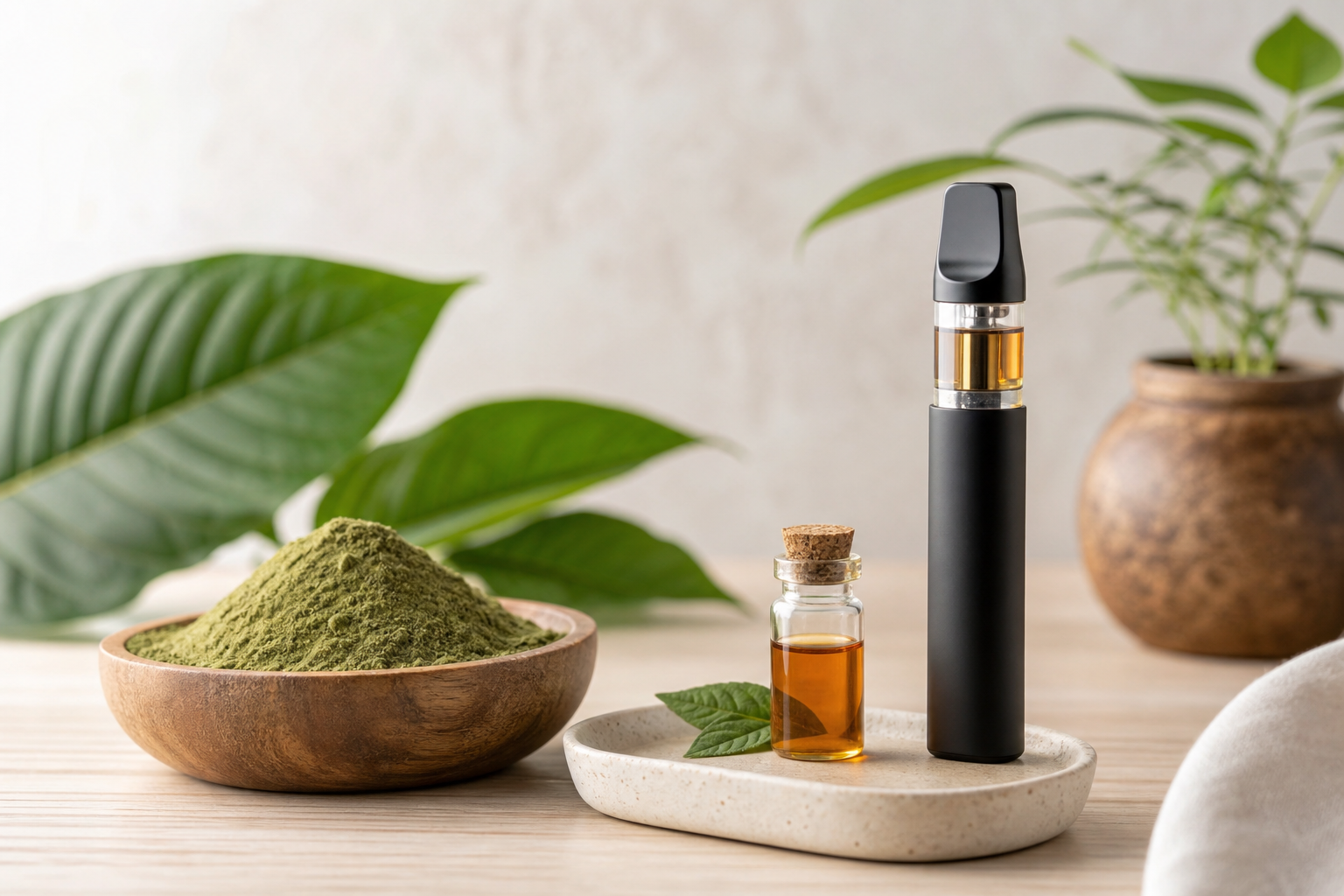
Kratom is most often associated with powders, capsules, teas, and extracts, but inhalable items marketed as kratom vape products have become more visible. That visibility can make the category seem straightforward: a plant ingredient in a familiar device. It is not.
A kratom leaf preparation and a vape formulation are fundamentally different products, with different routes of exposure, different manufacturing questions, and different unknowns. Consumers considering these products should approach them cautiously, read labels closely, and recognize that “herbal” does not automatically mean simple, tested, or low risk.
Start With the Basic Question: What Is Actually in the Device?
The term “kratom vape” can describe several very different things. A product may contain a kratom-derived extract, a blend of botanical flavorings marketed with kratom imagery, isolated or concentrated compounds, or ingredients whose connection to kratom is unclear. Product names and packaging alone are not enough to establish what is being inhaled.
Kratom’s most discussed naturally occurring compounds are kratom alkaloids, including mitragynine. In leaf material, these alkaloids exist alongside many other plant constituents. Turning plant material or an extract into a liquid suitable for a vape device requires formulation choices that are not relevant to swallowing a capsule or preparing tea.
Consumers should be especially wary of vague language such as “kratom blend,” “botanical complex,” or “proprietary herbal formula” when no meaningful ingredient detail is supplied. Those phrases do not tell a buyer the concentration of any kratom-derived component, the carrier liquid, or whether other active substances are present.
Why Inhalation Changes the Safety Conversation
Inhaling a substance is not equivalent to consuming it orally. Heating a liquid, aerosolizing it, and drawing it into the lungs introduces separate concerns about delivery, dose, temperature, device materials, and chemical changes that can occur during heating.
Research and consumer knowledge around traditional oral kratom preparations should not be assumed to apply to inhaled formulations. A kratom extract may behave differently when mixed into a vape liquid, and the aerosol produced by a device can differ from the liquid listed on a package. The safety profile of a substance can depend greatly on how it enters the body.
This is one reason kratom vape safety should be evaluated more conservatively than marketing language often suggests. Claims that a product is “clean,” “natural,” or “plant-based” do not answer whether its aerosol has been evaluated for inhalation. Plants can contain biologically active compounds, and an ingredient that is acceptable in a food, supplement, or topical product is not automatically appropriate for the lungs.
Read Vape Product Labeling Like It Matters—Because It Does
Clear vape product labeling is a practical minimum, not a luxury. A consumer should be able to identify the product’s contents and understand what the manufacturer represents it to be.
Useful information includes:
- A full ingredient list, rather than only broad terms such as “natural flavors” or “extract blend.”
- Identification of the kratom-derived material used, such as leaf extract or a named alkaloid, where applicable.
- The amount of active material per milliliter or per device, when the product makes active-ingredient claims.
- The carrier base and any flavoring components.
- A batch or lot number, manufacturer or distributor contact information, and a date or other traceability information.
- Device directions, storage instructions, and clear warning statements.
A label cannot prove that a product is safe. It can, however, reveal when a company is offering too little information for an informed decision. Avoid products with no ingredient panel, no way to contact the responsible company, packaging that looks tampered with, or medical promises that sound too good to be true.
Pay Close Attention to Vape Additives
Kratom vape ingredients may include more than a kratom-derived extract. Vape additives can include carrier liquids, flavor compounds, sweeteners, cooling agents, viscosity modifiers, and other substances intended to affect taste or device performance. Each added ingredient creates another question: what happens when it is heated and inhaled?
This does not mean every additive is necessarily harmful, nor does it mean a short ingredient list guarantees safety. It means that consumers should avoid treating all herbal vape products as interchangeable. A product’s botanical branding says little about its full formulation.
Be skeptical of formulas that use artificial color, have an unusually strong perfume-like odor, leave visible residue, leak extensively, or produce an unexpected harshness. These signs do not diagnose a particular issue, but they are reasonable grounds to stop using the item and avoid further exposure.
Consumers should also avoid modifying devices or mixing liquids at home. Combining extracts, oils, flavorings, or liquids not designed for the specific device can change heating behavior and increase the chance of contamination, leaking, or excessive exposure.
Consider Potency and Uncertainty Together
A concentrated extract can make dosing less predictable, particularly when a product does not clearly state what it contains. The concentration of mitragynine or other kratom alkaloids may vary across source material and manufacturing batches. In a vape format, the amount a person takes may also vary with puff length, device power, liquid flow, and personal use patterns.
Do not assume that taking smaller or more frequent puffs provides precise control. If active content is undisclosed, there is no dependable baseline from which to judge exposure. Products with ambiguous potency claims, unusually aggressive effects claims, or no batch-specific information warrant added caution.
Potential effects and adverse reactions can differ from person to person. Stop use and seek medical attention for troubling symptoms such as breathing difficulty, chest pain, fainting, severe confusion, seizure-like activity, or signs of a serious allergic reaction. For less urgent but persistent adverse effects, a clinician or pharmacist can help assess possible interactions and next steps.
Avoid Risky Combinations and Situations
Responsible kratom use includes recognizing when not to experiment. Do not combine a kratom vape with alcohol, sedatives, opioids, stimulants, or other substances that affect mood, alertness, breathing, or heart rate. Interactions may be unpredictable, especially where product contents or potency are uncertain.
People who are pregnant or breastfeeding, minors, and people with significant medical conditions should avoid products with poorly established inhalation safety. Anyone taking prescription or over-the-counter medicines should speak with a qualified healthcare professional before using a kratom-derived product, since botanical compounds can interact with medications.
Avoid driving, operating machinery, or doing safety-sensitive work after using a product that could affect concentration, coordination, or judgment. Keep devices and liquids away from children and pets; concentrated liquids and damaged cartridges can pose hazards if swallowed or mishandled.
Check the Legal and Retail Context
Kratom regulations vary by jurisdiction, and rules governing vape devices, nicotine products, hemp-derived products, consumer labeling, and botanical extracts can overlap. A product being available online or in a local shop is not proof that it is permitted everywhere or that it has undergone premarket safety review.
Before purchasing or traveling with a product, check the current rules where you live and where you are going. Retailers should be able to explain basic compliance practices, but consumers should not rely solely on a seller’s verbal assurances.
A careful decision starts with a simple standard: if a manufacturer cannot clearly say what is in the device, how much is present, and who is accountable for the product, the safest choice is to leave it behind. For inhalable kratom products, transparency is not a marketing extra; it is the baseline for making a responsible choice.