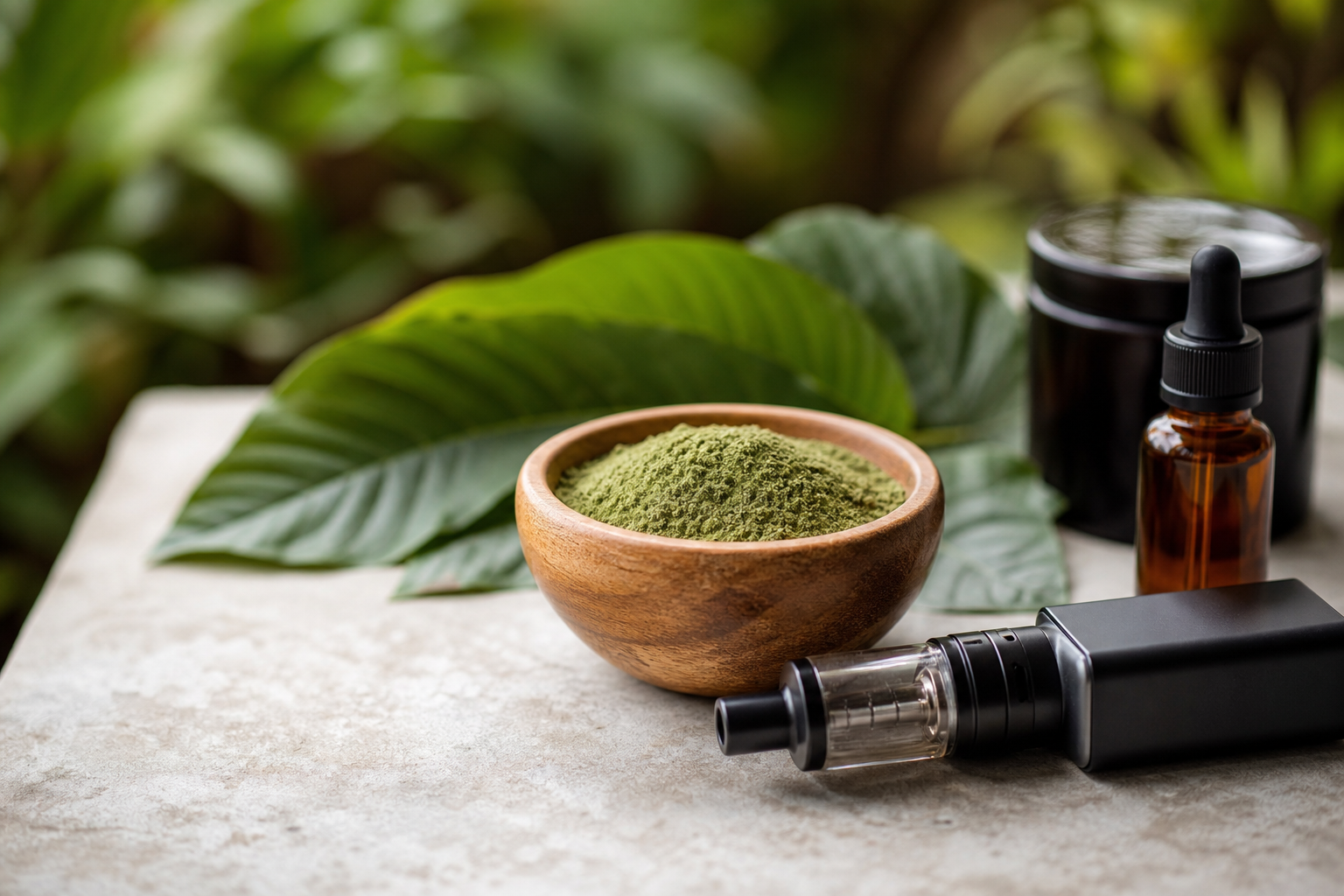
Kratom and vaping are sometimes discussed together because both sit in a fast-changing consumer landscape shaped by regulation, marketing, and personal wellness choices. But they are not interchangeable products, and treating them as such can obscure important differences in how they work, how they are used, and where the risks lie.
A useful kratom vs vaping comparison starts with the basics: kratom is a botanical product, while vaping is a delivery method for inhaled substances. Either may involve meaningful health considerations, particularly when a person uses high doses, uses frequently, mixes substances, or buys from an unreliable source.
What Kratom Is and How It Is Commonly Used
Kratom comes from the leaves of Mitragyna speciosa, a tree native to Southeast Asia. Its naturally occurring alkaloids can produce different effects depending on the product, amount used, individual sensitivity, and other variables. People may describe low amounts as more stimulating and higher amounts as more sedating, but effects are not reliably predictable from a label, strain name, or color alone.
Common kratom consumption methods include powders mixed into beverages, capsules, tablets, teas, and extracts. Extracts deserve particular caution because they can be substantially more concentrated than plain leaf products. A serving that seems small by volume may contain a much larger amount of active alkaloids than a person expects.
Kratom is not risk-free because it is plant-derived. Possible adverse effects include nausea, constipation, dizziness, drowsiness, sweating, and changes in appetite. Regular use can lead to tolerance and dependence, and some people experience withdrawal symptoms when they stop after frequent use. Serious outcomes have also been associated with kratom use, especially where other drugs or alcohol were involved or where a product may have been contaminated or adulterated.
Responsible kratom use begins with recognizing those limits. Avoiding combinations with alcohol, opioids, sedatives, or other substances that affect the central nervous system is particularly important. Anyone who is pregnant or breastfeeding, has a liver condition, takes prescription medication, or has a history of substance-use problems should seek individualized advice from a qualified healthcare professional before considering kratom.
Vaping Is a Method, Not a Single Product
Vaping refers to heating a liquid or material into an aerosol that is inhaled. The contents vary widely. Some devices deliver nicotine vaping liquids; others may contain cannabis-derived substances, flavorings, or products marketed as nicotine-free. The device itself, heating temperature, liquid ingredients, and user behavior all affect exposure.
Nicotine vaping can create or maintain nicotine dependence. Nicotine may affect heart rate and blood pressure, and it is especially concerning for adolescents and young adults because the brain continues developing into adulthood. For adults who smoke combustible cigarettes, switching completely to a regulated nicotine vape may reduce exposure to many toxic combustion products. That does not make vaping harmless, and dual use—continuing to smoke while vaping—may undermine the potential benefit of switching.
Vape health risks also include airway irritation, coughing, throat discomfort, and exposure to substances created or released during heating. Illicit, counterfeit, or poorly made cartridges add another layer of uncertainty. Consumers should not assume that “nicotine-free,” “natural,” or a familiar flavor means a product has been adequately tested for inhalation safety.
Why the Risks Cannot Be Compared Directly
Kratom is usually swallowed, so its effects and risks are primarily related to dose, digestion, metabolism, interactions, and product composition. Vaping delivers aerosol into the lungs, often producing effects quickly. Its central concerns include respiratory exposure, nicotine dependence where nicotine is present, device safety, and uncertainty about aerosol ingredients.
Neither route is automatically safer simply because it feels more familiar. Swallowing a botanical powder does not eliminate concerns about potency or contaminants. Inhaling an aerosol does not make a substance safer because it bypasses digestion. The relevant question is what is being consumed, how much, how often, from whom it was purchased, and whether it is being combined with anything else.
One important practical distinction is that vaping kratom is not an established or well-supported kratom consumption method. Kratom’s principal alkaloids are typically used orally, and attempting to vape powders, homemade extracts, or unverified “kratom vape” products can introduce additional hazards. Heating a substance not designed and tested for inhalation may change its chemistry, damage a device, or expose the user to particles and compounds that should not enter the lungs.
Product Quality and Herbal Supplement Safety
For kratom consumers, herbal supplement safety means looking beyond branding. Product labels may not always accurately convey potency, and botanical materials can vary between batches. A careful buyer should favor companies that provide accessible, batch-specific independent laboratory reports covering identity, microbial contamination, heavy metals, and other relevant contaminants. Reports should be current, understandable, and connected to the actual product batch rather than used as generic marketing material.
Be skeptical of products that promise to diagnose, treat, cure, or prevent disease. Such claims are a warning sign, particularly for a product whose effects can vary widely among users. It is also sensible to avoid sellers that do not list ingredients, lot information, contact details, or basic directions.
The same mindset applies to vape products. Use devices and liquids from established, accountable sellers; do not modify batteries; and avoid homemade liquids or cartridges from informal sources. Damaged batteries and incompatible chargers can create fire or injury risks separate from the health effects of vaping itself.
Regulation and Legality Matter
Kratom legality differs by country, state, county, and city. A product may be lawful in one jurisdiction and restricted or prohibited in another. Consumers should verify local rules before purchasing, traveling with, or ordering kratom. Legal availability should not be mistaken for a guarantee of quality, safety, or suitability for an individual.
Vape regulations also vary considerably. Rules may govern minimum purchase age, nicotine concentration, packaging, flavor sales, taxes, online shipping, device standards, and where vaping is permitted. Consumers should buy only through lawful channels and pay attention to product notices and local restrictions.
Making a Safer Personal Decision
Kratom education and clear-eyed self-assessment are more useful than broad claims that either product is “safe” or “dangerous” in every circumstance. Someone considering kratom should ask why they want to use it, what else they take, whether they can reliably limit their use, and whether they have access to transparent product testing. Someone considering nicotine vaping should distinguish between switching completely from cigarettes and beginning nicotine use for the first time.
Do not use kratom or vape products to self-manage severe pain, depression, anxiety, withdrawal, or a medical condition without professional support. Escalating use, cravings, inability to cut back, and using despite clear harms are signs to pause and seek help. Consumers who choose either product are best served by modest expectations, careful sourcing, avoidance of risky combinations, and a willingness to stop when the costs begin to outweigh the perceived benefits.