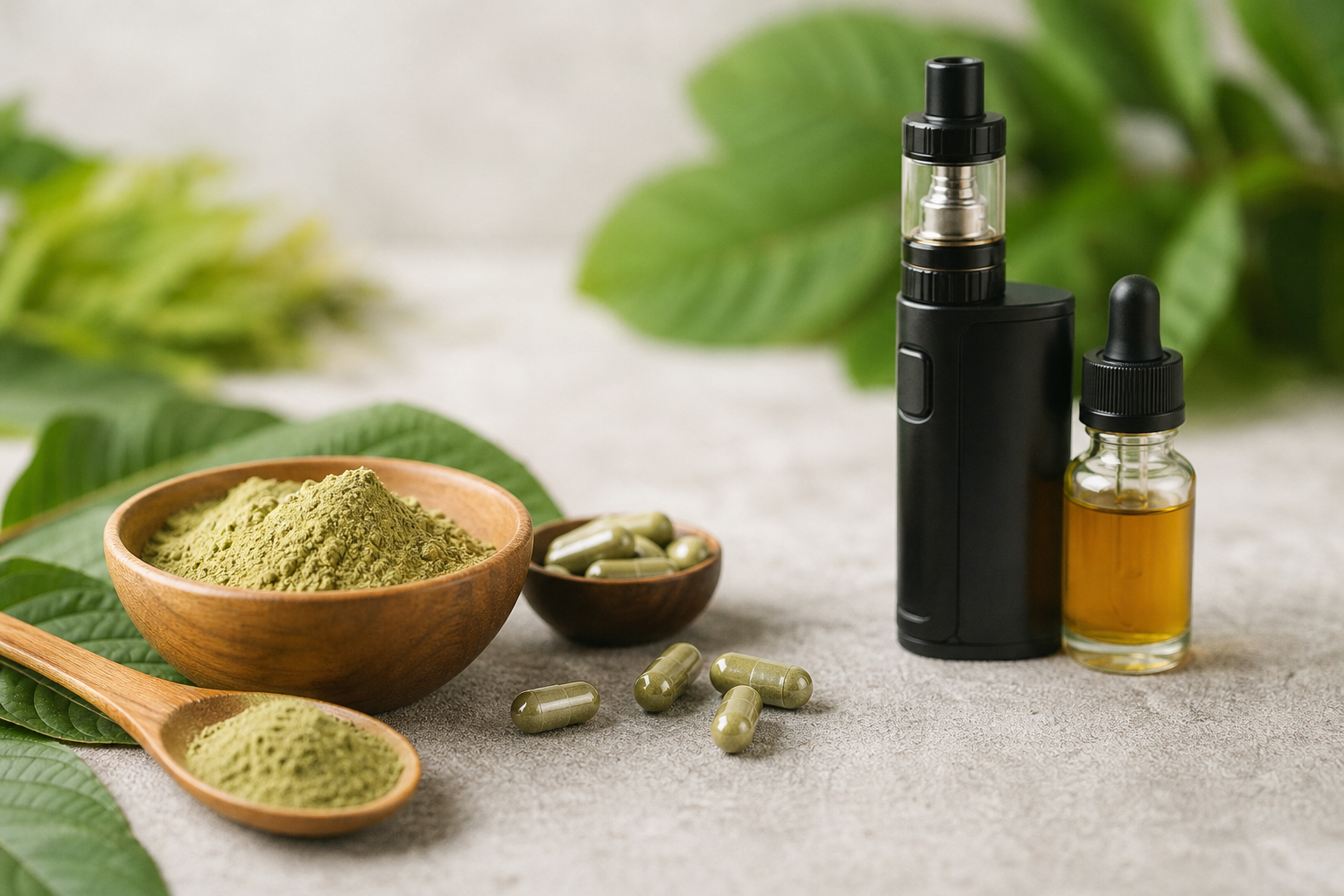
Kratom and vaping can appear in the same conversations because both are often framed as alternatives: kratom as a plant-derived product used for energy, mood, discomfort, or opioid withdrawal, and vaping as an alternative delivery method for nicotine or cannabis. But the comparison has limits. They involve different substances, different routes of use, and different patterns of risk.
For someone weighing kratom vs vaping, the useful question is not which is “safe.” It is what a particular product contains, why it is being used, what risks apply to that person, and whether use is becoming difficult to control.
Different products, different mechanisms
Kratom is made from the leaves of Mitragyna speciosa, a tree native to Southeast Asia. Its active compounds, including mitragynine and 7-hydroxymitragynine, can act on opioid receptors as well as other systems in the body. Kratom effects vary with the product, amount used, individual tolerance, and setting. People may describe stimulation or alertness at some levels of use and sedation, pain relief, or calming effects at others.
Vaping is a delivery method rather than one substance. A vape device heats a liquid or other material into an aerosol that is inhaled. The product may contain nicotine, cannabis-derived compounds, flavorings, or other ingredients. Nicotine vaping is particularly common among people seeking an alternative to combustible cigarettes, but it can also establish or maintain nicotine dependence.
That distinction matters. Kratom is typically swallowed as powder, capsules, tea, extracts, or packaged products. Vaping delivers substances through the lungs, usually producing faster effects. A rapid onset can reinforce repeated use, especially with nicotine.
The risks are not interchangeable
Kratom safety concerns include nausea, constipation, dizziness, sweating, dry mouth, sleep disruption, and changes in mood or appetite. Some users develop tolerance, dependence, and withdrawal symptoms after regular use. Withdrawal may include irritability, anxiety, low mood, restlessness, muscle aches, and sleep difficulty.
More serious concerns are possible. Kratom has been associated with liver injury in some cases, and risks rise when it is mixed with other drugs or alcohol. Product quality is also a major issue. Herbal supplements are not automatically consistent, pure, or accurately labeled. Contamination, adulteration, and unexpectedly potent extracts can make one package very different from another.
Vape health risks depend heavily on what is vaped and how often. Nicotine can cause dependence and may affect heart rate, blood pressure, sleep, and anxiety. Aerosol exposure is not the same as breathing clean air, and long-term health effects are still being studied. Poor-quality devices, altered cartridges, and informal or illicit products add risks related to unknown ingredients, contamination, battery failures, and excessive exposure.
For adults who smoke cigarettes, switching completely from smoking to regulated nicotine vaping may reduce exposure to many combustion-related toxicants. That is not the same as saying vaping is harmless, nor does it make vaping a good starting point for people who do not use nicotine.
Dependence can look different, but still matters
A person using nicotine may find themselves reaching for a device repeatedly throughout the day, often without noticing how automatic the behavior has become. Cravings can be closely tied to routines such as driving, taking breaks, drinking alcohol, or managing stress.
With kratom, dependence may develop around repeated dosing for energy, mood, sleep, pain, or to avoid withdrawal. The pattern can be less visible when a product is marketed as natural. “Plant-based” does not mean non-habit-forming, especially when a product acts on opioid receptors or is used daily.
Warning signs for either product include needing more to get the same effect, using despite unwanted physical or financial consequences, planning the day around the substance, hiding use, or feeling unable to cut back. These signals call for an honest reassessment, not shame.
Mixing substances raises the stakes
The most important harm-reduction point is that kratom should not be treated casually in combination with other psychoactive substances. Combining it with alcohol, opioids, benzodiazepines, sleep medications, or other sedating drugs can increase the danger of excessive sedation and breathing problems. People taking prescription medicines should speak with a qualified clinician or pharmacist before using kratom because interactions can be difficult to predict.
Vaping can also complicate the picture. Nicotine may worsen jitteriness, palpitations, or anxiety in people already experiencing stimulating kratom effects. If cannabis or another intoxicating substance is being vaped, impairment can increase and judgment can decline. Avoid driving, operating machinery, or taking on safety-sensitive work while affected.
Anyone experiencing trouble breathing, chest pain, severe confusion, fainting, a seizure, bluish lips, or an inability to stay awake needs urgent medical attention. When seeking care, it is important to tell clinicians what was used; accurate information supports safer treatment.
Practical kratom harm reduction
Responsible kratom use starts with reducing uncertainty. Avoid products that make dramatic medical claims, do not provide clear labeling, or seem designed to conceal their actual ingredients. Be especially cautious with concentrated extracts and products marketed as unusually strong; they can make it easier to consume more active compounds than intended.
Other sensible safeguards include:
- Avoid mixing kratom with alcohol, sedatives, opioids, or other drugs that can impair breathing or consciousness.
- Do not use it as a substitute for medical evaluation of ongoing pain, depression, anxiety, or opioid use disorder.
- Track frequency and reasons for use. Daily use for the same problem can signal growing dependence.
- Avoid use during pregnancy or breastfeeding, and keep products away from children and pets.
- If cutting down after regular use, consider medical guidance rather than abruptly making a change that feels unmanageable.
The same general approach applies to vaping: know the product, avoid informal or modified cartridges, do not share devices, and pay attention to escalating use. For nicotine users who want to quit, a clinician, pharmacist, quitline, or evidence-based cessation plan can provide more reliable support than simply switching endlessly between products.
Legal status and product oversight
Kratom legality varies substantially by country, state, county, and city, and rules can change. A product sold online or in a neighboring area may not be legal where the buyer lives. Restrictions may apply to possession, sale, age, labeling, or product form. Checking current local law is a basic part of responsible kratom use.
Vape regulations also vary. Rules may govern minimum age, nicotine concentration, flavors, retail licensing, packaging, advertising, and where products can be used. Legal sale does not guarantee that a product is appropriate for every individual, but regulated channels generally offer more accountability than anonymous sellers.
Choosing the lower-risk next step
Neither kratom nor vaping is a one-size-fits-all wellness tool. A person who does not use nicotine has little reason to begin nicotine vaping. A person considering kratom for persistent pain, anxiety, low mood, or withdrawal should first consider medical support and established treatment options, particularly when symptoms are severe or ongoing.
For those who already use either product, the practical goal is to reduce preventable harm: avoid mixing substances, avoid unknown products, recognize dependence early, and seek support before a pattern becomes harder to change. Clear-eyed decisions are safer than marketing language, whether the label says herbal, natural, tobacco-free, or smoke-free.