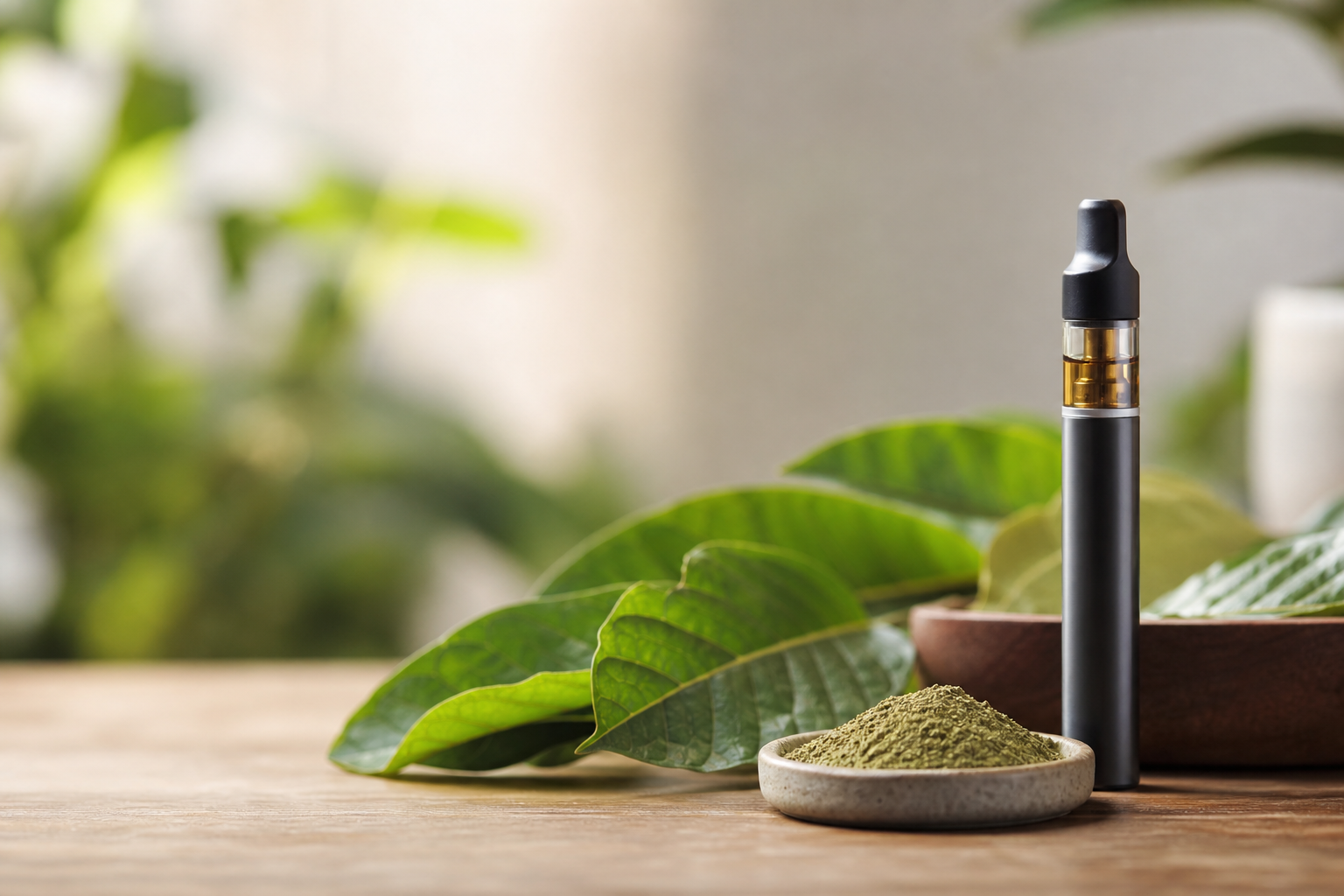
Botanical vapes are showing up in shops and online catalogs alongside familiar hemp, nicotine, and flavor-focused devices. Their appeal is easy to understand: they are portable, discreet, fast-acting in feel, and often presented as a modern alternative to capsules, powders, teas, or tinctures.
For kratom consumers, however, a botanical vape should not be treated as a simple new delivery format. A plant-derived ingredient can behave very differently when it is heated and inhaled than when it is brewed, swallowed, or used in an extract. Product quality, ingredient transparency, device design, and individual health factors all matter.
“Botanical” Is Not a Safety Guarantee
The word botanical can describe a vast range of ingredients, including plant extracts, isolated compounds, essential oils, terpenes, flavorings, and blends whose full composition may not be immediately clear. It says something about marketing or origin, but not necessarily about how well a substance has been studied for inhalation.
Many herbal vape products contain botanical extracts dissolved in a carrier liquid or combined with flavoring agents. Some use broad plant blends; others focus on a single recognizable herb. The label may also refer to “natural flavors” or proprietary formulations without identifying each component and its amount.
That matters because an ingredient that is tolerable in food or in an oral supplement is not automatically appropriate to heat and inhale. Heating can alter compounds, and vaporized substances may reach sensitive lung tissue directly. Consumers should separate the idea of plant-based from the much stronger claim of inhalation safety.
Kratom Is Not Simply a Vape Ingredient
Kratom has traditionally been consumed orally. The plant’s naturally occurring alkaloids, its bitter taste, and the way its material is processed make a direct comparison with conventional vape liquids unreliable.
A product marketed with kratom language may not contain recognizable kratom leaf material at all. It could contain a refined extract, a blend of botanical compounds intended to create a particular sensation, or a product that uses kratom-adjacent branding without offering meaningful detail about the formula. A consumer should not assume that a device labeled “kratom,” “mitragynine,” or “botanical blend” will resemble the effects, duration, or risks associated with their usual kratom routine.
That distinction is especially important for people who track serving size carefully. Inhaled products may feel faster than oral preparations, which can encourage repeated use before a person has had time to assess how they are responding. Fast onset does not make dosing more predictable.
Read Vape Labeling Like a Skeptic
Clear vape labeling is one of the most practical signals a buyer can evaluate before purchase. A trustworthy label should help a consumer understand what is in the cartridge, disposable device, or bottled liquid—not merely promise a mood or experience.
Look for a complete ingredient list, including carrier liquids, flavor components, botanical extracts, and any named active compounds. Be cautious with products that only use broad phrases such as “proprietary botanical matrix” or “herbal complex,” particularly when no further explanation is available.
A responsible seller should also make it possible to identify the manufacturer or distributor, locate a batch or lot number, and find directions and warnings. Independent laboratory documentation can be useful when it is specific to the batch and relevant to the finished product. A generic certificate, a report for raw plant material, or a document that does not match the product name is less meaningful.
Questions worth asking before buying include:
- What, exactly, is being vaporized?
- Does the label identify every carrier and flavoring ingredient?
- Is the product intended for inhalation, rather than repurposed from an oral extract?
- Can the company provide batch-specific testing and explain what was tested?
- Does the device disclose its intended use, storage guidance, and basic safety warnings?
If a seller cannot answer simple questions about composition, there is little reason to let marketing fill the gaps.
Consider Inhalation Risks Separately From Oral Use
Vaping introduces its own set of concerns, regardless of whether a product contains nicotine, cannabinoids, or botanical extracts. Aerosol can include more than the advertised ingredients. Device temperature, coil condition, liquid formulation, contamination, and use patterns can all affect what a person inhales.
Potential inhalation risks may be greater for people with asthma, chronic lung conditions, heart concerns, or sensitivity to fragrances and flavorings. Anyone who experiences chest discomfort, shortness of breath, wheezing, severe coughing, dizziness, or an unusual reaction should stop using the product and seek appropriate medical advice.
It is also sensible to avoid combining botanical vapes with alcohol, sedatives, stimulants, or other substances that can complicate how a person feels or functions. Kratom consumers who use prescribed medication should be especially careful about unverified blends. A product’s “natural” positioning does not rule out unwanted interactions.
Vape product safety also includes the hardware. Do not use leaking, damaged, overheated, or altered devices. Avoid trying to refill a disposable device or adding oils, tinctures, powders, or homemade plant extracts to equipment not designed for them. Products made for oral use are not necessarily suitable for a vaporizer.
Watch for Claims That Outrun the Evidence
Botanical vape marketing can lean heavily on words such as clean, wellness, calm, focus, energy, or balance. Those terms can be vague enough to avoid explaining what a product does, how strongly it may act, or who should avoid it.
Be wary of products claiming to treat medical conditions, replace medications, eliminate withdrawal, or deliver guaranteed effects. Such claims should prompt more questions, not greater confidence. The absence of nicotine does not establish that a product is harmless, and the presence of a familiar plant name does not prove that a formulation has been tested for respiratory use.
For consumers following kratom news, it is useful to distinguish between coverage of a plant, coverage of a compound, and coverage of a retail product. These are not interchangeable. Evidence or controversy involving one does not automatically apply to every extract, blend, or device sold under a similar label.
Regulations and Local Rules Can Change
Vape regulations vary by location and may cover age limits, packaging, online sales, flavored products, manufacturing practices, and which ingredients can be sold. Rules affecting kratom can also differ across jurisdictions. A product being available online or on a store shelf does not necessarily mean it is permitted everywhere or that it meets the same standards in every market.
Before ordering or traveling with a botanical vape, check current local rules and retailer policies. Consumers should also be cautious about products marketed as ways around existing restrictions. That language can be a sign that the seller is relying on ambiguity rather than transparent compliance.
Make a Deliberate First Decision
The best consumer education often begins with deciding whether a new format is necessary at all. Someone who is comfortable with an existing oral kratom routine may not gain enough from a botanical vape to justify the added uncertainty of inhalation and a less familiar formulation.
For those who still choose to try one, starting with a clearly labeled product from a transparent seller is more sensible than experimenting with an anonymous or highly promotional device. Avoid using it in situations where impaired judgment, driving, work duties, or caring for others could create risk. Keep it secured away from children and pets, and do not share mouthpieces or devices.
Botanical products deserve the same caution consumers would apply to any inhaled substance: know what it contains, understand what is not known, and treat unclear labeling as a reason to walk away rather than an invitation to experiment.