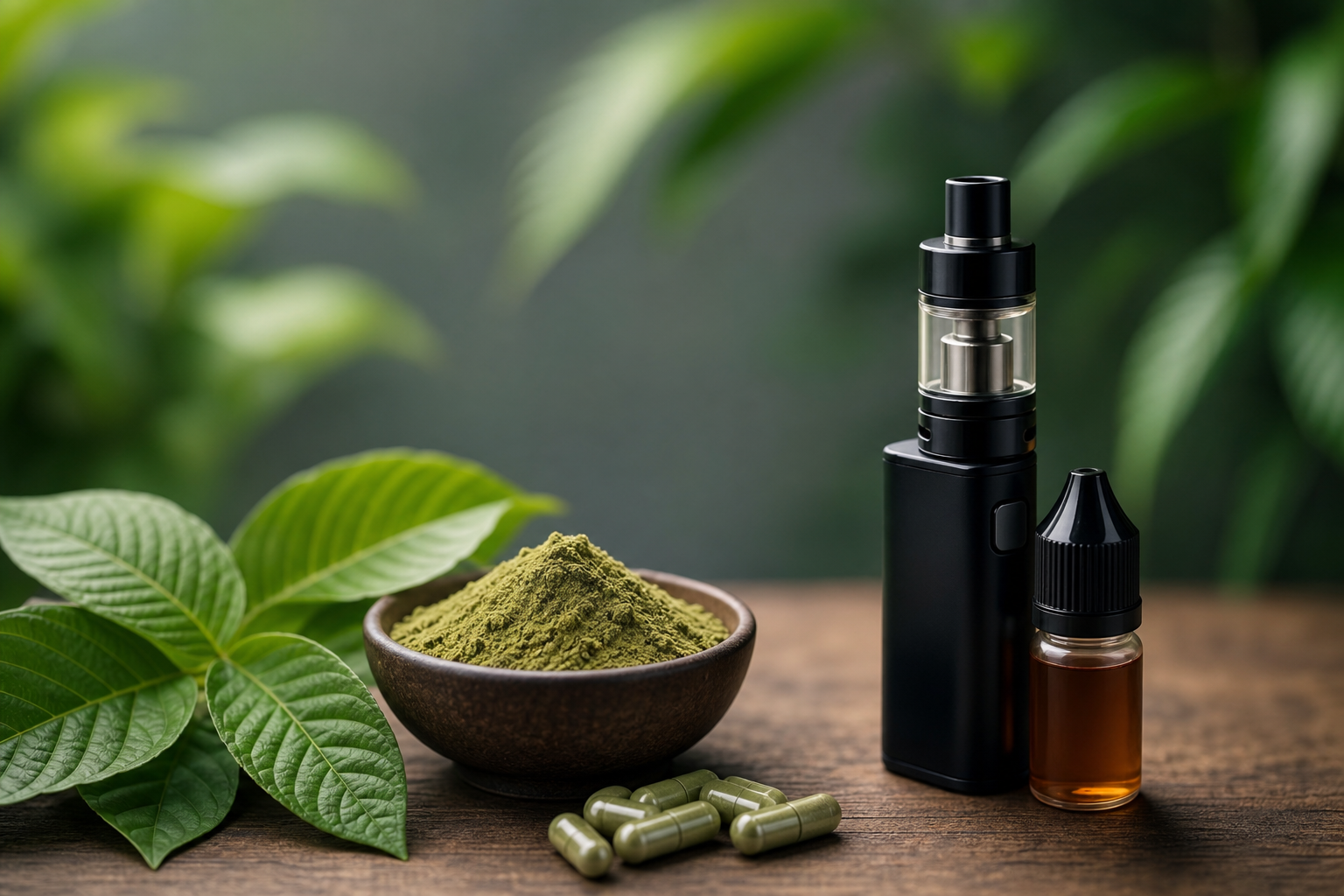
Kratom and vaping are sometimes discussed together because both may be part of an adult’s routine for managing mood, energy, relaxation, or habitual cravings. But they are not comparable in the most important ways. Kratom is a botanical product typically consumed orally, while vaping is a delivery method that heats a liquid or other material into an inhalable aerosol.
That distinction affects onset, duration, ingredients, health considerations, and the questions a person should ask before using either. A useful kratom vs vaping comparison starts by separating the substance from the method of delivery.
Different substances, different delivery routes
Kratom comes from the leaves of Mitragyna speciosa, a tree native to Southeast Asia. Products are commonly sold as dried leaf powder, capsules, tea, extracts, or chewable preparations. Its active alkaloids can produce effects that vary with the product, amount used, the individual, and other substances involved.
Vaping describes inhaling an aerosol produced by a device. The device may contain nicotine e-liquid, nicotine-free flavored liquid, cannabis-derived materials where permitted, or other formulations. A vape is not one substance; it is a route of administration with a wide range of possible contents.
This matters because “vaping” alone does not identify the relevant risk. Vape ingredients may include nicotine, propylene glycol, vegetable glycerin, flavoring compounds, cannabinoids, solvents, and contaminants. Products from regulated and reputable sources are not risk-free, but unregulated cartridges and liquids add further uncertainty about what is actually being inhaled.
How effects tend to differ
Kratom effects are often described as dose- and person-dependent. Some users report more alert or motivating effects at lower amounts and more calming or sedating effects at higher amounts. Others experience little benefit, unpleasant side effects, or unpredictable results. Effects from oral kratom generally begin more gradually than inhaled substances and can last for several hours.
Vaping effects arrive quickly because inhaled aerosol reaches the bloodstream through the lungs. With nicotine, people may notice a brief stimulant effect, relief of nicotine withdrawal, or a sense of relaxation tied to habit and routine. Those effects can fade quickly, encouraging repeated use throughout the day. Cannabis vaping, where legal, has a different effect profile and carries its own impairment and mental-health considerations.
Neither route should be mistaken for harmless simply because it is familiar or commercially available. Rapid onset can make vaping especially reinforcing, while the slower, longer-lasting nature of oral kratom can make it easier to underestimate how much has been taken before effects fully develop.
Comparing safety concerns
Kratom safety begins with acknowledging that “natural” does not mean automatically safe. Kratom can cause nausea, constipation, dizziness, sweating, drowsiness, and other unwanted effects. Regular use can lead to tolerance, dependence, and withdrawal symptoms when a person stops. Concentrated extracts may create additional risk because they can deliver substantially more active alkaloids than traditional leaf products.
The most serious concerns arise when kratom is combined with alcohol, sedatives, opioids, stimulants, or other drugs. These combinations can increase impairment and may raise the risk of dangerous reactions. People with medical conditions, those who are pregnant or breastfeeding, and anyone taking prescription medication should seek advice from a qualified healthcare professional before considering kratom.
Vape safety has a different focus. Nicotine is addictive, and vaping can establish or maintain nicotine dependence. Inhalation can irritate the throat and airways, and long-term respiratory and cardiovascular consequences are still an important concern. Devices also carry practical hazards: damaged batteries, improper charging, leaking liquid, and accidental exposure to e-liquid can cause injury.
For people who smoke combustible cigarettes, switching completely to a regulated nicotine vape may reduce exposure to some toxicants associated with burning tobacco. That does not make vaping safe, and it is not a reason for a non-user to begin. Dual use—smoking and vaping together—may preserve much of the risk associated with smoking while adding nicotine exposure from another source.
Consumption methods shape the decision
Kratom consumption methods are primarily oral. Powder mixed into a beverage can be difficult to measure accurately and may be unpleasant to take. Capsules are more convenient but can delay awareness of effects, which may tempt people to take more too soon. Tea and traditional leaf preparations may be less concentrated than extracts, though potency can still vary widely by batch.
The basic safety principle is to avoid treating all kratom products as interchangeable. A labeled serving of one powder may not feel like the same amount of another product, and extracts should never be approached as if they were ordinary leaf powder. Independent testing for identity and contaminants is a meaningful quality signal, although it cannot eliminate all risk.
Vape products are used through reusable devices, pods, disposable devices, or cartridges. Device settings can affect how much aerosol is produced, while nicotine concentration affects dose. The combination can make it surprisingly easy to consume more nicotine than intended. Avoid modifying devices, mixing unknown liquids, or using products from informal sources.
Kratom should not be vaped. There is no well-established safe practice for heating and inhaling kratom material or extracts, and combustion or overheating can create additional unknown compounds. Products marketed with vague claims about “botanical vape” effects deserve particular caution.
Practical choices for risk reduction
For adults who choose to use either product, clarity about the goal is essential. Is the aim to stop smoking, manage a nicotine habit, seek relaxation, address pain, or simply experiment? The safest option for many people—especially adolescents, pregnant people, those with substance-use concerns, and people with heart, lung, liver, or mental-health conditions—is not to start.
Responsible kratom use means choosing tested products, avoiding extracts when unfamiliar with kratom, starting cautiously rather than escalating quickly, and never mixing it with alcohol or other intoxicating substances. Do not drive, work at heights, operate machinery, or make safety-sensitive decisions if kratom causes drowsiness, dizziness, or slowed reactions.
With vaping, choose regulated products where available, know whether nicotine is present, keep liquids and devices away from children and pets, and use the supplied charger and intact batteries. If quitting nicotine is the goal, a structured cessation plan and evidence-based support may be more reliable than indefinitely replacing one nicotine product with another.
Recognizing when to get help
Stop using and seek urgent medical care for trouble breathing, chest pain, fainting, severe confusion, seizures, signs of an allergic reaction, or severe vomiting. Contact a poison control service or local emergency resource after accidental ingestion of vape liquid or a suspected overdose.
Kratom education and vape safety information should be treated as tools for better decisions, not as permission to ignore warning signs. Herbal alternatives and nicotine products can both carry meaningful risks, particularly when used frequently, combined with other substances, or used to self-treat conditions that deserve professional care. A candid conversation with a clinician can help someone weigh those risks against their goals and identify safer options.