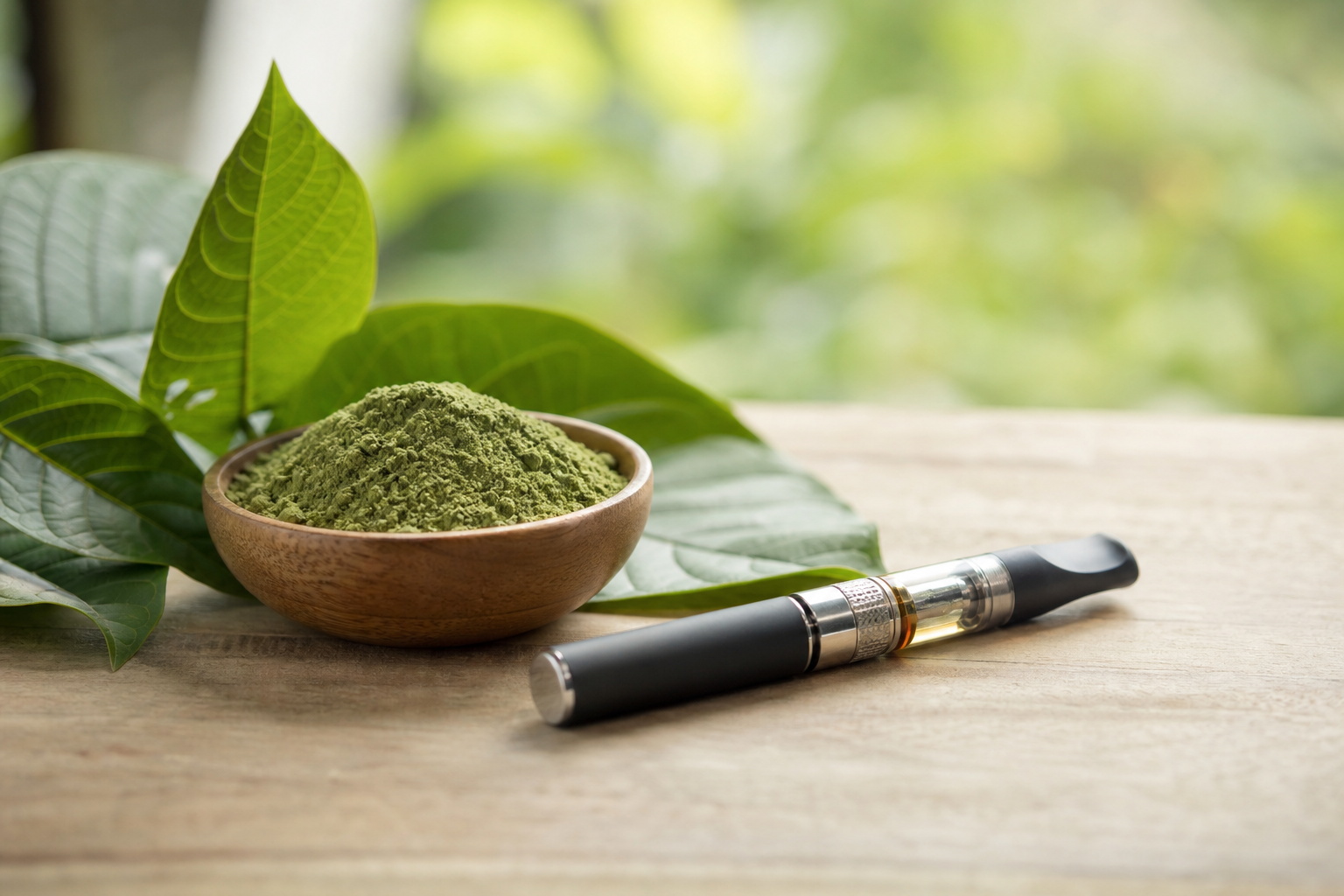
Kratom is often discussed alongside wellness products, smoke-shop items, and newer vape trends, but that does not mean it belongs in a vaporizer. Consumers considering kratom vaping should approach it with more caution than marketing or social media posts may suggest.
Kratom products vary substantially in plant material, alkaloid content, added ingredients, and intended route of use. Vaping introduces a separate set of concerns: heating can change chemicals, concentrates can obscure what is actually being inhaled, and the long-term effects of inhaling many botanical extracts are not well understood.
For anyone weighing the options, the safest decision may be to avoid inhaling kratom or products presented as “kratom vapes” unless their ingredients, manufacturing practices, and risks are clear.
Why the route of use matters
Kratom comes from the leaves of Mitragyna speciosa. It has traditionally been prepared for oral use, such as powders, teas, capsules, and extracts. Its active compounds are usually discussed in relation to digestion and metabolism, not inhalation.
When a substance is heated and inhaled, the body absorbs it differently. A vape device also heats a liquid, oil, or other formulation into an aerosol. That process can create compounds that were not present in the original product. It may also expose the user to solvents, flavorings, carrier liquids, or contaminants.
This distinction matters because a product derived from a plant is not automatically safe to inhale. Many substances that can be eaten or taken as an oral supplement are not appropriate for the lungs. “Natural” and “herbal” describe an origin, not a safety profile.
Some herbal vape products may contain plant-derived flavor ingredients or extracts without providing meaningful information about concentration, testing, or stability under heat. Others may use the word “kratom” loosely in branding even when the formula includes several psychoactive ingredients. A label alone is not enough to establish what is in the cartridge or disposable device.
What is known—and unknown—about kratom vape safety
There is limited reliable evidence supporting the safety or effectiveness of inhaled kratom formulations. That lack of information is important. It means consumers cannot confidently assume that a vape delivers the same kratom effects as an oral product, at a predictable dose, or with comparable risks.
In addition to the unknowns around the kratom extract itself, vaping carries its own potential harms. Vape health risks can include airway irritation, coughing, chest discomfort, and exposure to substances created or released during heating. Poorly made devices may leak, overheat, or deliver inconsistent amounts of material.
Concentrated products deserve particular caution. Extracts can be much stronger than plain leaf, and a consumer may not know how much active material is delivered in each puff. A rapid-onset inhaled product can make it easier to take repeated doses before recognizing that the total exposure is becoming excessive.
Avoid products that do any of the following:
- Do not identify all ingredients, including carrier liquids and flavorings
- Make sweeping medical, pain-relief, or withdrawal-treatment claims
- Fail to provide batch information or independent contaminant testing
- Combine kratom with cannabinoids, nicotine, stimulants, sedatives, or unnamed “proprietary blends”
- Have a damaged cartridge, unusual odor, discoloration, leaking fluid, or harsh chemical taste
A product that is difficult to verify is not a product to experiment with by inhalation.
Vaping and kratom: interaction concerns
Kratom interactions are a central safety issue whether the product is swallowed or inhaled. Kratom’s compounds can affect the nervous system, and individual responses vary with dose, product strength, health conditions, tolerance, and other substances used at the same time.
Combining kratom with alcohol, opioid medications or illicit opioids, benzodiazepines, sleep medicines, or other sedating substances can increase the risk of excessive drowsiness, impaired coordination, slowed or difficult breathing, and loss of consciousness. These combinations are especially concerning because users may not recognize how strongly the effects can compound.
Stimulant combinations bring a different set of concerns. Nicotine, high-caffeine products, prescription stimulants, and other stimulating drugs may contribute to racing heart, anxiety, nausea, agitation, or elevated blood pressure in susceptible people. Since many vape users already use nicotine, this is a practical issue for anyone considering a kratom-labeled device.
Certain prescription medicines may also interact with kratom through effects on liver enzymes or the central nervous system. People taking medication for mood, sleep, seizures, pain, blood pressure, heart conditions, or substance-use treatment should speak with a pharmacist or clinician before using kratom in any form. That conversation should include vaping specifically, rather than assuming oral-use advice applies to inhaled products.
Recognizing a bad reaction
Stop using the product and seek urgent medical help for trouble breathing, severe chest pain, fainting, seizures, confusion, inability to stay awake, blue or gray lips, or signs of a serious allergic reaction such as facial swelling or wheezing.
Less severe symptoms still matter. Nausea, vomiting, dizziness, sweating, tremor, severe anxiety, palpitations, headache, or persistent coughing can signal that the product, dose, or combination is not agreeing with the user. Do not try to “balance out” unwanted effects with alcohol, nicotine, caffeine, cannabis, or another drug.
If someone becomes unusually sleepy or unresponsive after using kratom with other substances, treat it as a possible overdose situation. Call emergency services or local poison assistance rather than waiting to see whether the person improves.
A practical approach to responsible use
Responsible kratom use starts with deciding whether use is necessary at all. People who are pregnant or breastfeeding, have liver or kidney disease, respiratory disease, a heart condition, a history of substance-use disorder, or a history of severe mental health symptoms should be especially cautious and seek individualized medical guidance.
For adults who choose to use kratom despite the uncertainties, a conservative kratom consumer guide would emphasize avoiding inhaled formulations, avoiding combinations, and choosing one route of administration rather than layering products. Do not use kratom before driving, cycling in traffic, operating machinery, working at height, or taking responsibility for another person’s safety.
Basic vape safety tips also apply: use only devices intended for their specific cartridge or liquid, do not modify batteries or heating elements, stop using damaged equipment, and keep liquids and devices away from children and pets. Never assume a child-resistant package is childproof.
Be skeptical of claims that a kratom vape is a safer alternative to smoking, a harmless way to manage discomfort, or a reliable substitute for medical care. A lower odor or a sleek device does not remove the uncertainty around inhaled extracts.
Consumers should also watch for patterns of escalating use. Needing more product for the same result, using it to avoid feeling unwell, feeling unable to skip it, or continuing despite health, financial, or relationship problems can indicate dependence. Support from a healthcare professional or substance-use counselor can be useful without requiring shame or judgment.
The clearest safety principle is simple: kratom was not established as an inhaled product, and the risks of heating and inhaling kratom formulations remain poorly defined. When information is incomplete, choosing not to vape it—or pausing until a product can be independently verified—is a reasonable form of harm reduction.