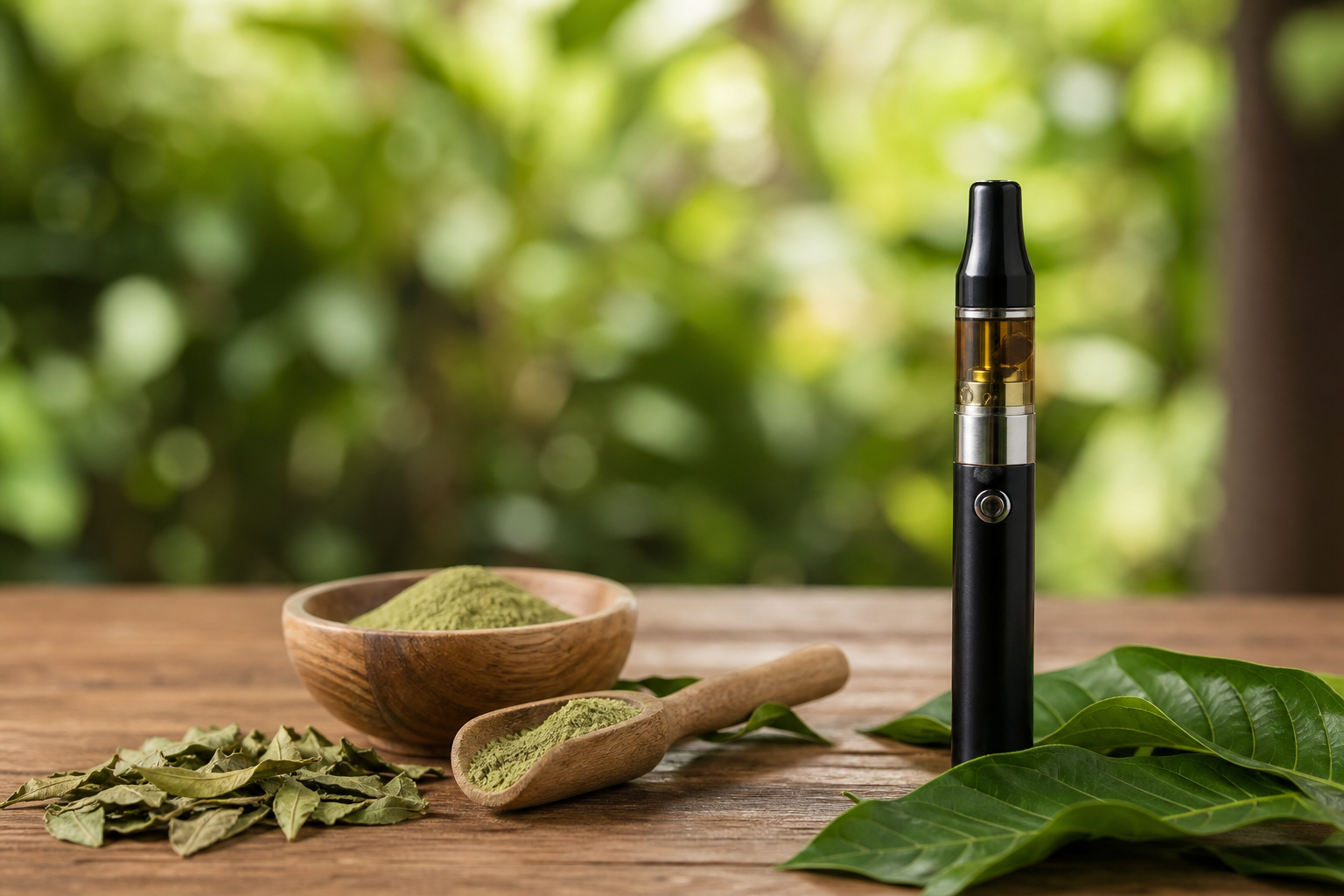
Interest in botanical vape alternatives has grown alongside broader demand for convenient, plant-derived wellness products. For people already familiar with kratom products, a vaporizer pen or cartridge can look like a natural extension of a botanical routine: portable, discreet, and quicker to use than tea, powder, or capsules.
That assumption deserves a closer look. Kratom is typically consumed orally, while inhaled products introduce a different route of exposure, different formulation concerns, and a regulatory landscape that can be difficult to read. A product being marketed as botanical does not automatically mean it is appropriate to vape, compatible with kratom, or low risk.
“Botanical” Is a Broad Marketing Term
Botanical extracts can come from many plants and may be offered in oils, gummies, tinctures, powders, capsules, beverages, or inhalable formulations. Those formats are not interchangeable.
An extract intended for oral use is not necessarily safe to heat and inhale. Ingredients that are acceptable in a tincture or edible can behave differently when exposed to a heating element. Oils, flavorings, thinning agents, and additives may also create concerns when aerosolized. Consumers should never attempt to put kratom powder, homemade kratom preparations, tinctures, or ordinary dietary supplements into a vape device.
This point matters because the term herbal vaping can create an impression of simplicity: plant in, vapor out. In reality, commercial vapor products often contain a formulation designed to flow through specific hardware and produce an aerosol at particular temperatures. The extract itself is only one part of that formulation.
Kratom Is Not an Inhalable Substitute
Kratom consumers considering vape alternatives should be especially cautious about products that imply kratom can be vaped or that use vague claims about “kratom-inspired” effects. Traditional kratom products are associated with oral consumption, and there is limited reliable information supporting inhalation of kratom alkaloids or improvised kratom extracts.
Heating plant material or concentrated extracts can alter compounds, create degradation products, and irritate the airways. The lack of clear consumer information is not a reason to experiment. It is a reason to avoid treating a new delivery method as equivalent to one that is better known.
A seller’s use of words such as natural, clean, full-spectrum, or botanical should not replace basic product transparency. If a company cannot clearly state what is in a cartridge, what carrier ingredients are used, and how the product is meant to be used, consumers have little basis for making an informed decision.
Why the Category Is Growing
Several vaping trends help explain the rise of botanical products. Some adults seek alternatives to combustible smoking. Others want an option that does not involve nicotine, or they prefer the convenience and ritual of a vape device without choosing a conventional nicotine product.
Herbal wellness marketing also plays a role. Consumers increasingly encounter products positioned around relaxation, focus, sleep support, mood, or everyday balance. Those desired outcomes overlap with reasons some people explore kratom, even though the plants, active compounds, risks, and legal status can differ substantially.
Convenience should not obscure those differences. A fast-acting format may feel appealing, but a quicker onset can also make it harder for a person to judge how a product affects them before taking another puff. For anyone using multiple botanical products, the simplest approach is often the safest: introduce only one new variable at a time, if at all.
Read the Label Beyond the Front Panel
People evaluating botanical vape alternatives should look past attractive branding and broad wellness language. A responsible product should provide a complete ingredient list, identify the botanical source, and distinguish the active extract from carriers, flavorings, and other components.
Useful questions include:
- Is the botanical ingredient specifically named, rather than hidden behind a proprietary blend?
- Does the label disclose all carrier liquids and flavoring ingredients?
- Is there batch or lot information that connects the item to quality-control records?
- Does the company make testing information available and explain what was tested?
- Are the intended use, device compatibility, storage instructions, and age restrictions clear?
- Does the marketing avoid promising treatment, cure, or guaranteed effects?
Testing documentation is valuable only when it is meaningful. A report should correspond to the actual product or batch, not simply show that an unrelated raw ingredient was once tested. Depending on the product, consumers may want information about identity, potency, contaminants, residual solvents, heavy metals, and microbial concerns. The exact tests needed vary by formulation, but broad claims of “lab tested” without details should be treated cautiously.
Interactions and Personal Risk Matter
Kratom consumers should avoid assuming that a non-nicotine vape is automatically compatible with their existing routine. Botanical extracts may have pharmacological effects, and combining products can make unwanted effects harder to predict. This is particularly important when alcohol, sedating substances, stimulants, prescription medicines, or other supplements are involved.
People with respiratory conditions may have additional reasons to avoid inhaled products. Anyone who is pregnant or nursing, managing a chronic condition, taking medication, or concerned about substance use should speak with an appropriate healthcare professional before trying a new botanical product.
It is also sensible not to use a new vape before driving, working in a safety-sensitive setting, or doing anything that requires sharp judgment. Stop using a product and seek medical help promptly if serious symptoms occur, such as trouble breathing, chest pain, fainting, severe confusion, or signs of an allergic reaction.
The Regulatory Picture Can Change Quickly
Vape regulations differ widely by location and may apply to devices, ingredients, labeling, age limits, shipping, retail sales, or manufacturing practices. A product’s availability online does not confirm that it is legal, compliant, or permitted where the buyer lives.
For kratom consumers, this is a familiar issue. Rules affecting kratom products can vary across jurisdictions, and the same is true for inhalable botanical goods. Consumers should check current local and state requirements rather than relying on a brand’s website or social media account. Retailers and manufacturers also bear responsibility for understanding the rules that apply to their products.
Regulatory uncertainty is another reason to avoid gray-market cartridges and unlabeled refills. Products sold without clear sourcing, packaging, or ingredient disclosure leave consumers with few ways to verify what they are inhaling.
Choosing Caution Over Novelty
Kratom education starts with recognizing that route of administration matters. An oral botanical product and an inhaled botanical product may share a plant-based identity, but they do not share the same exposure profile or the same evidence base.
For consumers who are curious about vape alternatives, the most practical standard is transparency. Choose only products with clear ingredients and credible quality information, avoid homemade or repurposed formulations, do not combine multiple substances casually, and pay attention to changing vape regulations. When the label, testing, or intended use is unclear, passing on the product is often the best decision.