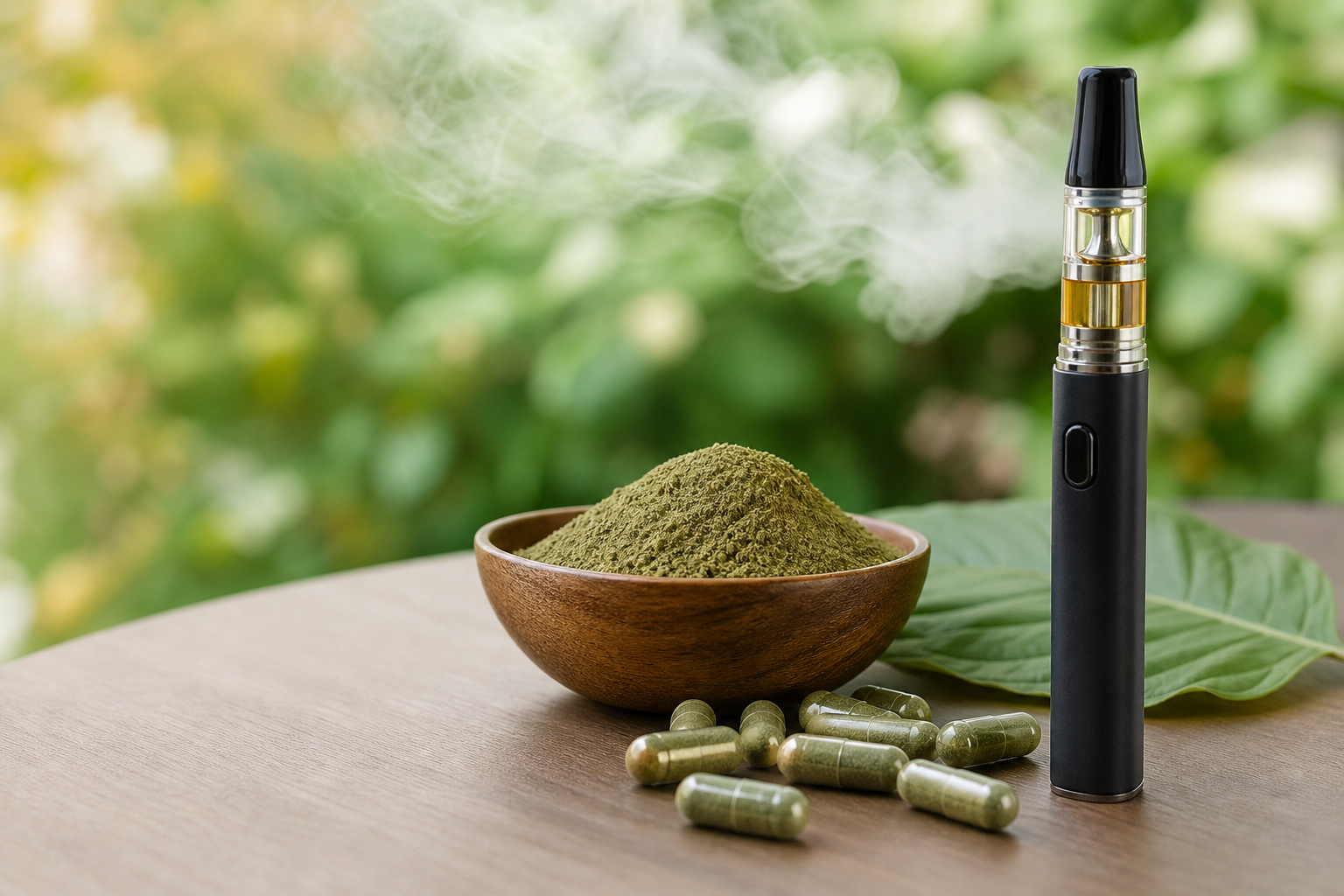
Kratom and vaping can overlap in more than one way. Some people use nicotine vapes while taking kratom, others vape cannabis or herbal blends, and a smaller group may consider vaping kratom itself. These are not equivalent practices, and treating them as if they carry the same risks can lead to poor decisions.
The most important distinction is simple: traditional kratom products are generally consumed orally. Vaping kratom is not a well-established route of use, and there is limited reliable information about what heating and inhaling kratom-derived material does to its active compounds or to the lungs. A product marketed as a kratom vape should therefore be approached with much more caution than a conventional leaf powder, tea, capsule, or clearly labeled extract.
Why the Route of Use Matters
Kratom contains naturally occurring compounds commonly called kratom alkaloids. The better-known alkaloids can affect the body in ways that vary with the product, amount used, individual tolerance, and other substances involved. Oral use produces effects through digestion and metabolism. Inhalation changes the delivery route and may change both the onset and the risk profile.
Heat is a major uncertainty. A vape device does not merely turn a substance into a harmless mist. Its coil and liquid formulation can expose ingredients to heat, and the resulting aerosol may contain compounds that are different from the original material. With herbal vape products, the quality of the extract, thinning agents, flavorings, device temperature, and possible contaminants all matter.
A label that says “natural” or “herbal” is not proof of kratom vape safety. Nor does a familiar brand name guarantee that a product has been tested for inhalation. Products sold as extracts may also differ substantially in strength from raw leaf products.
The Known Concerns Around Vaping Kratom
There is no strong basis for assuming that a kratom extract is safe to inhale simply because kratom can be consumed orally. A substance intended for swallowing may not be suitable for the lungs. Plant oils, poorly refined extracts, residual solvents, unlisted additives, and contaminants can present particular concerns when aerosolized.
Potential vape health risks also apply independently of kratom. Vaping can irritate the throat and airways, trigger coughing, worsen breathing symptoms in susceptible people, and expose users to aerosol constituents created by heating. Nicotine-containing products introduce their own dependence and cardiovascular concerns.
For someone considering vaping kratom, uncertainty is itself a safety signal. Avoid improvised methods, homemade cartridges, loose plant material in devices not designed for it, and products without transparent ingredient information. If a product does not clearly state what it contains, where it was made, and how it is intended to be used, the safer choice is not to use it.
Kratom Interactions Can Be More Important Than the Device
The central issue with kratom interactions is not always a direct chemical reaction. Often, the risk comes from overlapping effects: sedation, nausea, impaired judgment, stimulation, elevated heart rate, or added strain on the body.
Nicotine and caffeine may make some people feel more alert, but they can also contribute to jitteriness, anxiety, palpitations, or sleep disruption. Kratom effects can vary widely, so combining it with stimulants may feel manageable one day and uncomfortable the next.
More concerning combinations include alcohol, opioids, benzodiazepines, sleep medications, sedating antihistamines, and other substances that can impair breathing or consciousness. Combining kratom with these substances can increase the possibility of dangerous sedation, confusion, vomiting, accidents, or breathing problems.
Cannabis vapes can also complicate the picture. Some people may experience increased dizziness, anxiety, impaired coordination, or nausea when combining cannabis and kratom. The combination may be particularly risky when driving, operating equipment, or making decisions that require quick reactions.
People taking prescription medication should be especially careful. Kratom may affect how the body processes certain medicines, and vaping does not remove that concern. A pharmacist or clinician can help assess potential interactions based on the actual medication, dose, health history, and kratom product involved.
A Practical Approach to Responsible Kratom Use
Responsible kratom use starts with limiting variables. Using a new kratom product while changing nicotine strength, adding cannabis, drinking alcohol, or taking a new medication makes it difficult to know what is causing an unwanted effect.
If you use kratom and vape, consider these guardrails:
- Do not treat a kratom vape as interchangeable with oral kratom. Its potency, delivery, and lung exposure may be unknown.
- Avoid combining kratom with alcohol, opioids, sedatives, or other drugs that can suppress alertness or breathing.
- Use only products with clear ingredient lists and avoid cartridges or liquids that make vague claims about “proprietary” herbal blends.
- Do not drive, ride, swim, climb, or operate machinery if you feel drowsy, dizzy, impaired, unusually stimulated, or nauseated.
- Keep products secured away from children and pets, especially concentrated extracts and vape liquids.
- Pay attention to patterns. Repeated need for larger amounts, cravings, withdrawal-like symptoms, or use that interferes with work and relationships are reasons to reassess use and seek support.
Starting with a lower-risk choice may mean keeping kratom and vaping separate rather than stacking them. It may also mean choosing not to use an inhaled kratom product until better product-specific information is available.
When to Stop and Get Help
Stop using the substance or combination if you develop chest pain, shortness of breath, fainting, severe agitation, confusion, persistent vomiting, severe abdominal pain, swelling of the face or throat, or an irregular or racing heartbeat. Seek urgent medical care for severe symptoms, loss of consciousness, seizures, or trouble breathing.
Less urgent symptoms still deserve attention when they persist: ongoing cough, wheezing, worsening anxiety, sleep disruption, constipation, nausea, unusual fatigue, or changes in mood. A healthcare professional can help distinguish a kratom-related issue, a vaping-related issue, a medication interaction, or another health problem.
Kratom news often focuses on changing products, regulation, and claims made by vendors. For consumers, the more useful question is whether a specific product and pattern of use are transparent, predictable, and compatible with personal health. When the answer is unclear—especially with vaping kratom—caution is the responsible choice.