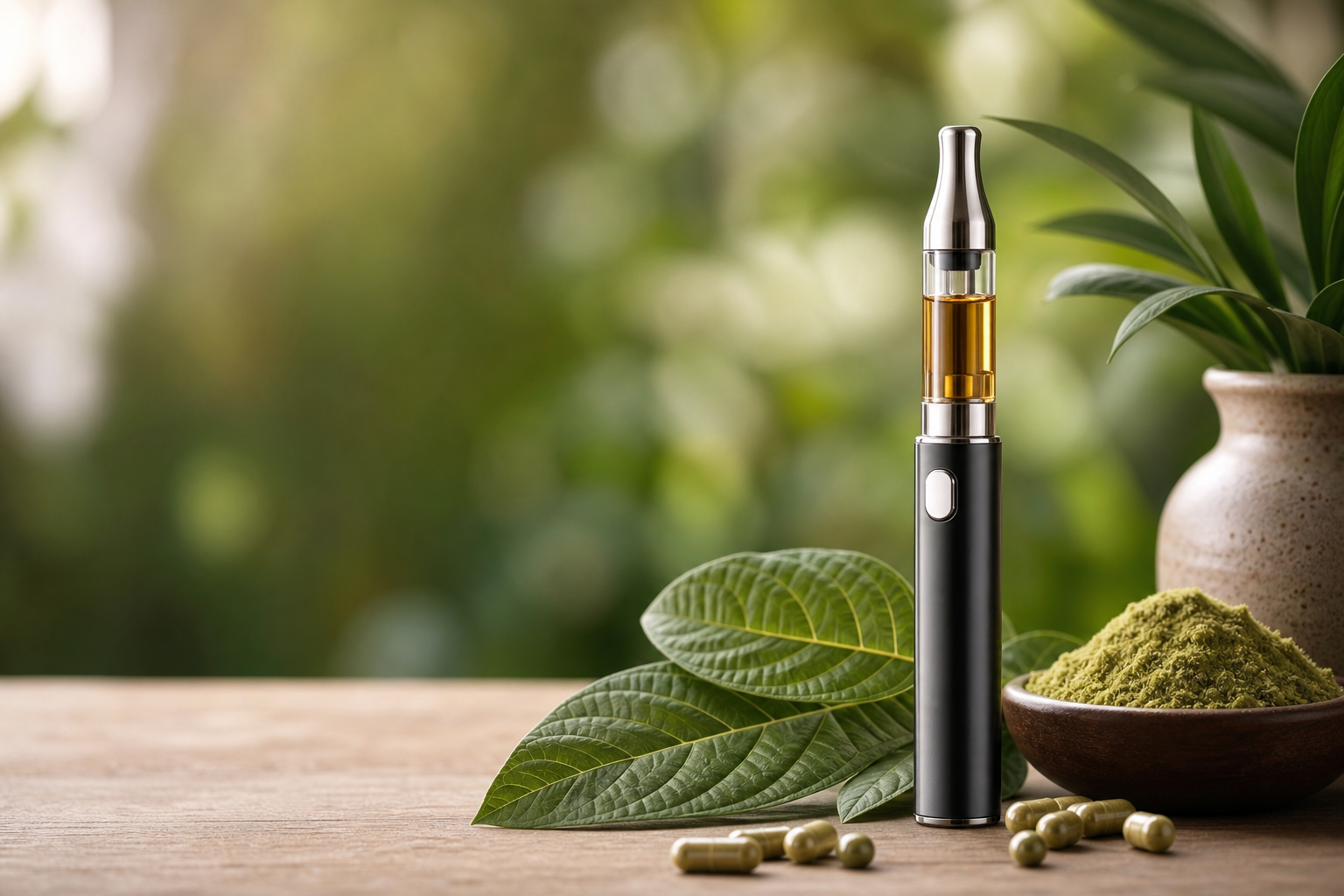
Botanical ingredients are moving into vape conversations once dominated by nicotine, flavors, and cannabis-derived compounds. For some adults, the appeal is straightforward: a plant-centered option that appears to fit into a broader wellness routine. For brands, it is an opportunity to meet demand for new formats. For regulators and consumers, it raises a more difficult question: what is actually known about inhaling botanical extracts?
That tension is central to current kratom vape trends. Kratom has traditionally been associated with leaf powder, capsules, teas, and extracts intended for oral use. Putting kratom or other herbs into an inhaled format is a major change in route of use, formulation, and potential risk. A product’s botanical origin does not automatically make it suitable for a vapor device.
Why botanical vapes are gaining attention
Interest in botanical vape alternatives is part of a wider movement toward products marketed as natural, plant-derived, or less conventional than mainstream nicotine vaping. Consumers who already buy herbal teas, functional beverages, supplements, or other herbal wellness products may see a botanical vape as a familiar extension of those choices.
Convenience is another driver. Vapes are portable, discreet, and fast-acting in the sense that inhalation delivers compounds differently from swallowing a capsule or drinking tea. That convenience can attract curiosity even when consumers are not certain what is in the device or whether the formulation has been assessed for inhalation.
The wider vape market trends also favor product experimentation. Companies continually look for ways to differentiate devices through new ingredients, blends, flavor profiles, and positioning. Plant-based vape products can sound distinctive in a crowded marketplace, especially when labels use terms such as “botanical,” “herbal,” or “wellness.” Those terms describe a marketing category, not a safety standard.
Kratom’s complicated fit in a vape format
Kratom is not simply another flavoring botanical. Its active alkaloids and the ways products are concentrated, extracted, or blended matter. A traditional kratom product and a cartridge labeled with kratom may have very little in common beyond the plant named on the package.
That distinction matters because heating a botanical extract can alter it. A liquid that is acceptable for oral use is not automatically appropriate for vaporization. Ingredients used to thin, stabilize, flavor, or preserve a liquid also require scrutiny. The safety question is not only whether kratom is present, but what else is present and what those ingredients become when heated.
Consumers should be particularly wary of broad claims that a vape offers the “same” effects as a leaf-based product. Dose consistency, delivery speed, ingredient stability, and the body’s response may differ substantially. Claims suggesting predictable wellness outcomes, therapeutic value, or a safer alternative to established forms deserve a high level of skepticism.
For kratom consumers, the most responsible approach is to avoid treating a new delivery method as interchangeable with familiar products. If the formulation, testing, and intended route of use are unclear, uncertainty is the defining feature—not a reason to assume the product is harmless.
Transparency is becoming the real dividing line
As interest grows, product transparency is likely to separate more credible companies from those relying on vague botanical branding. A responsible seller should be able to identify the active ingredients, the full ingredient list, the intended use, and whether independent laboratory testing has been performed.
A label that merely says “herbal blend” or “botanical extract” leaves major questions unanswered. Consumers should know whether the device contains kratom alkaloids, other psychoactive compounds, nicotine, cannabinoids, synthetic additives, flavorings, or proprietary mixtures. “Proprietary” should not become a shield for withholding basic safety-relevant information.
Useful signals to look for include:
- A complete, readable ingredient list rather than generalized plant language.
- Batch or lot information that allows a product to be traced.
- Independent testing that is specific to the finished vape liquid or cartridge, not only to raw plant material.
- Clear information about the manufacturer and a way to contact the company.
- No claims that dismiss risk, promise medical outcomes, or portray inhalation as inherently safe because an ingredient comes from a plant.
Testing alone cannot prove that a botanical vape is safe. It can, however, help identify whether a company is willing to disclose what it sells and whether the product matches its label.
Regulation will shape what survives
Vape regulations remain a major force in this emerging segment. Rules can vary by jurisdiction and may depend on the product’s ingredients, marketing claims, device type, and whether it contains nicotine or other regulated substances. Kratom’s legal status also varies, creating another layer of uncertainty for businesses and buyers.
That makes compliance more complicated than putting a plant extract into a cartridge. A company may need to consider rules governing consumer products, inhalable products, labeling, youth access, shipping, product registration, manufacturing standards, and advertising. A product sold online may still be restricted where the purchaser lives.
The regulatory picture is especially important because some botanical vape products may enter the market faster than scientific and safety standards develop. Consumers should not read retail availability as government approval or proof of quality. Sellers, meanwhile, should recognize that unclear product categories do not eliminate responsibility for accurate labeling and careful manufacturing.
Kratom industry news increasingly intersects with this issue. The discussion is no longer limited to leaf quality and oral products; it now includes novel extracts, delivery systems, product claims, and how emerging formats may affect public perception of the broader kratom market.
Wellness branding needs a reality check
Alternative wellness trends often blur the line between personal preference and evidence. A person may prefer plant-derived products, want to reduce nicotine use, or seek a ritual that feels different from smoking. Those motivations are understandable. They do not establish that a particular vaporized ingredient is effective or low-risk.
The word “natural” is particularly slippery. Many natural substances can irritate the lungs, interact with medications, or become problematic when concentrated or heated. Inhalation also bypasses some of the safeguards associated with oral products, because compounds can reach the bloodstream differently and more quickly.
Anyone with respiratory concerns, a history of sensitivity to inhaled products, or questions about medication interactions should be cautious. People who are pregnant, breastfeeding, underage, or managing a health condition should avoid relying on wellness marketing when making decisions about inhaled products and seek qualified medical guidance where appropriate.
What to watch before choosing a product
Vape product safety starts with a willingness to walk away from an unclear offering. Avoid products with no meaningful ingredient disclosure, no identifiable manufacturer, damaged packaging, unusual odor, leaking cartridges, or claims that sound too certain for an emerging category.
It is also sensible to separate two decisions: whether to use kratom at all, and whether to inhale a kratom-related formulation. A favorable view of one does not answer the other. The same principle applies to other plant-based vape products, whether they contain familiar herbs or blends with hard-to-pronounce extracts.
The botanical vape category may continue to expand, but growth should not be confused with maturity. The strongest long-term pressure on the market will come from informed consumers demanding transparent formulas, realistic claims, responsible age controls, and clearer evidence around inhalation. Until those expectations become routine, caution is a better guide than novelty.