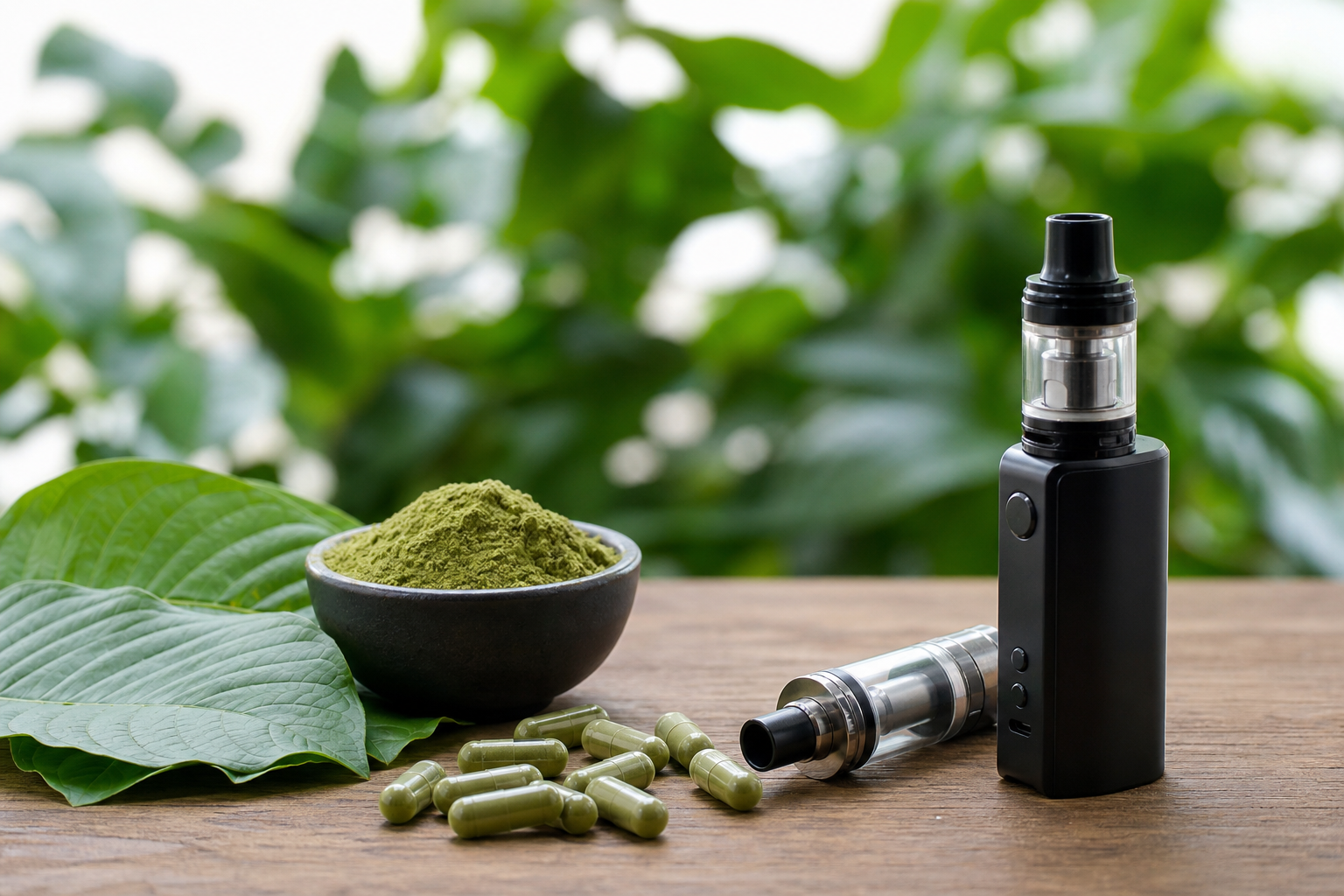
Kratom and vaping are often discussed together because both are used by adults seeking a change in mood, energy, relaxation, or routine. But they are not interchangeable products. They enter the body differently, carry different immediate concerns, and call for different buying decisions.
For anyone weighing kratom vs vaping, the useful starting point is simple: identify the actual product, the intended effect, and the risk you are willing to avoid. “Vaping” describes a delivery method, not one substance. Kratom is a plant-derived product, but its plant origin does not make it automatically low-risk.
Different Products, Different Routes
Kratom products are typically made from the leaves of Mitragyna speciosa. They are commonly sold as powders, capsules, tablets, extracts, teas, or blended products intended to be swallowed. The active compounds act on systems in the body that can affect alertness, comfort, mood, and sedation. Effects can differ substantially by product strength, serving size, individual tolerance, other substances used, and the product’s actual contents.
Vaping involves heating a liquid or other material to create an aerosol that is inhaled. The most familiar category is nicotine vaping, including disposable devices, pod systems, and refillable e-cigarettes. Other products may contain cannabis-derived compounds, flavoring mixtures, or substances marketed as botanical or functional blends.
The inhaled route generally produces effects more quickly than swallowing a capsule or drinking a tea. That speed can be appealing, but it can also make repeated use easier. A person may take another puff before fully considering how much nicotine or another substance they have consumed.
Comparing Expected Effects
Kratom effects are frequently described as varying with the product and amount used. Some users report feeling more alert or sociable at one level of use and more relaxed or sleepy at another. Those descriptions are not a guarantee of outcome. Nausea, dizziness, constipation, sweating, drowsiness, irritability, and impaired coordination can also occur. Strong extracts and combination products can make effects less predictable.
Nicotine is a stimulant and can produce a short-lived sense of alertness, focus, or relief from withdrawal in people already dependent on it. It can also raise heart rate, cause nausea or lightheadedness, and lead to cravings. For people who do not already use nicotine, vaping can create a dependence problem rather than solve one.
A key difference is that nicotine vapes are often used many times across a day, while kratom may be taken in more distinct servings. Neither pattern is automatically safe. Frequency, dose, and the reason for use matter more than whether a product feels familiar or is sold in a polished package.
Safety Questions That Matter
Kratom safety begins with uncertainty. Products can vary in potency, and quality control is inconsistent across the marketplace. Contamination, inaccurate labeling, and undisclosed ingredients are real concerns, especially with products that make dramatic claims or do not provide credible batch information.
Kratom can also interact with medications, alcohol, and other drugs. Combining it with sedating substances or products that affect the nervous system may increase the risk of dangerous impairment and other serious reactions. People with medical conditions, those who are pregnant or breastfeeding, and those taking prescription medicines should speak with a qualified clinician or pharmacist before using it.
Vape safety has its own set of concerns. Inhaling an aerosol is not the same as breathing clean air. Vaping health risks may include throat and airway irritation, coughing, and exposure to substances generated during heating. Device problems, poorly made batteries, leaking cartridges, and unregulated liquids add practical hazards. Nicotine products can also cause poisoning if e-liquid is swallowed or comes into contact with children or pets.
The strongest consumer rule for both categories is to avoid mixing products casually. Combining kratom with alcohol, sedatives, opioids, or other psychoactive substances can make adverse effects harder to predict. Similarly, using nicotine heavily while taking another stimulant can worsen unpleasant symptoms such as jitteriness or a racing heartbeat.
Dependence Is Not Just a Nicotine Issue
Nicotine dependence is well recognized: cravings, irritability, difficulty concentrating, and repeated use despite a wish to stop can develop quickly for some people. Switching from cigarettes to regulated nicotine vaping may be a harm-reduction choice for an adult smoker, but it is not a reason for a non-smoker to start vaping.
Kratom can also lead to tolerance, dependence, and withdrawal symptoms in some regular users. A person who feels unable to function without it, steadily increases intake, or experiences distress when skipping it should treat that as a warning sign rather than simply a need for a stronger product.
This is especially important when kratom or vaping is being used to manage stress, pain, fatigue, or low mood. Those concerns deserve direct support. Self-treatment can delay care and may turn a short-term coping tool into a harder-to-control habit.
Buying Decisions: Look Beyond Marketing
The marketplace is full of terms such as “natural,” “clean,” “wellness,” and “herbal.” They are marketing language, not proof of safety. So-called herbal alternatives can still contain potent compounds, inconsistent ingredients, or substances that have not been adequately studied for inhalation.
A practical kratom consumer guide starts with a few cautious checks:
- Avoid products that promise to treat, cure, or replace care for a medical condition.
- Be skeptical of unusually strong extracts, proprietary blends, and products without clear ingredient information.
- Prefer sellers that identify the product, provide lot or batch details, and make independent testing information available.
- Do not begin with multiple new products at once; it becomes difficult to identify what caused an unwanted reaction.
- Keep all kratom and vape products secured away from children, pets, and anyone for whom they are not intended.
For vape devices, use products from accountable retailers, avoid modifying devices or using damaged batteries, and do not use mystery cartridges or liquids from informal sources. A product’s flavor or packaging should never be mistaken for evidence that it is safe to inhale.
Regulation and Personal Responsibility
Kratom regulations differ by location and can change. Some jurisdictions restrict or prohibit sale, while others allow it with varying requirements. Consumers should check current local and state rules rather than relying on an online seller’s shipping policy.
Vape rules also vary, particularly around nicotine concentration, flavors, sales age, and where products may be used. Legal availability does not equal medical approval or personal suitability.
Responsible kratom use means understanding that a measured serving is not a universal safe dose, avoiding combinations, watching for tolerance, and stopping if adverse effects appear. Responsible kratom use also means not driving, operating equipment, or making safety-sensitive decisions when impaired.
The best choice may be neither kratom nor vaping, particularly for people with a history of substance-related problems, heart or lung concerns, medication interactions, or uncertainty about why they are seeking an effect. For adults choosing between them, the clearest distinction is this: kratom presents variable oral-product and interaction risks, while vaping introduces inhalation exposure and, with nicotine, a significant dependence risk. Neither deserves a casual label of “safe.”