The symptom
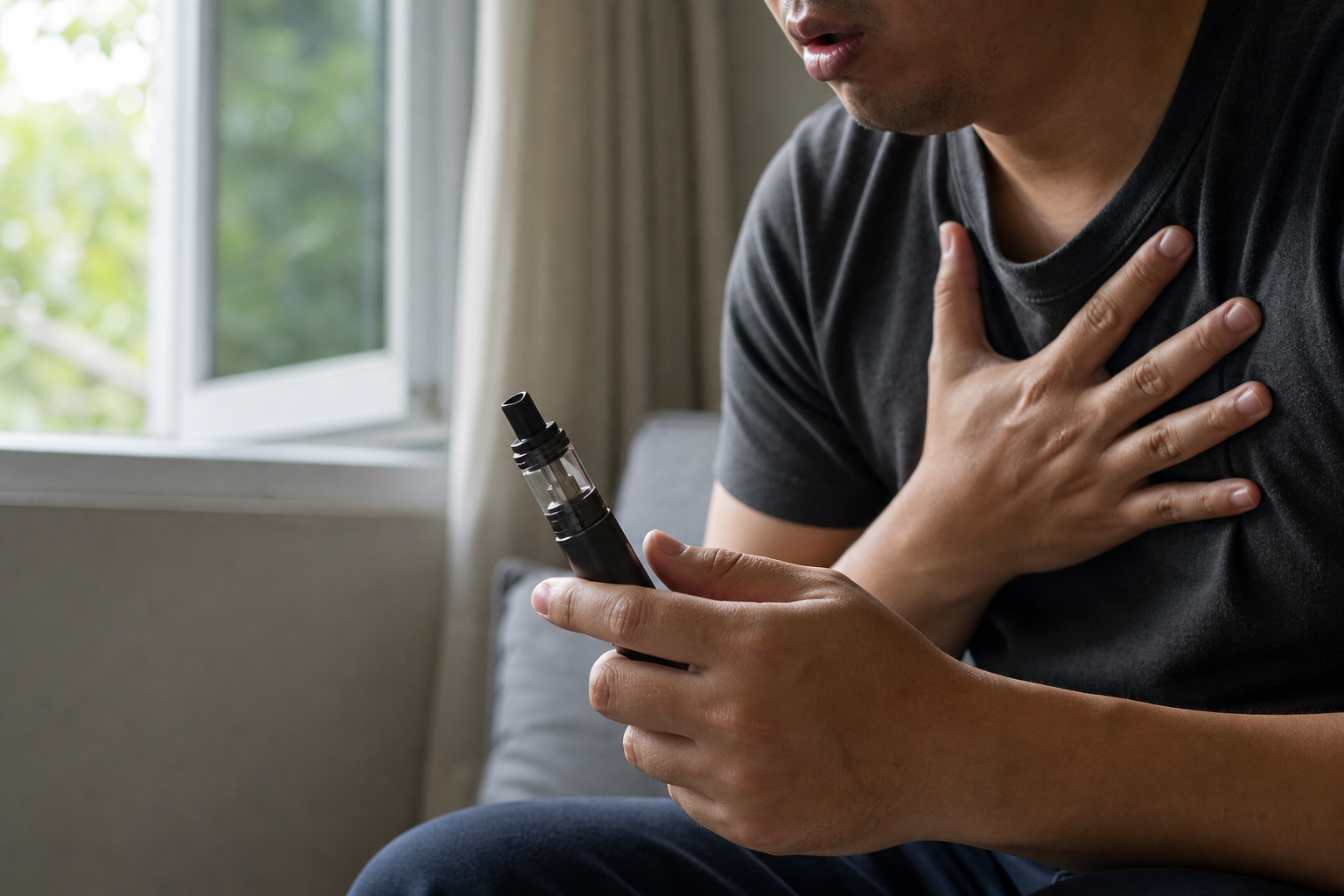
You may be comparing vaping lungs vs normal lungs because your chest feels tight, you are coughing more, you get winded sooner, or you are bringing up mucus. You may also feel fine but have seen dramatic lung images online and want to know whether your lungs look the same.
The difficult truth is that a visual comparison is not a useful home test. Lungs are inside the chest, and symptoms do not reliably show how much irritation or injury is present. A person can have a persistent cough from airway irritation, while another can have a more urgent problem with symptoms that initially seem mild.
The more useful question is: what changed, how quickly did it change, and does it improve when vaping stops?
Seek urgent medical care for severe or worsening shortness of breath, chest pain, blue or gray lips, confusion, fainting, coughing up blood, or difficulty speaking in full sentences. Do not keep testing whether you can tolerate another puff when breathing feels wrong.
What normal lungs should feel like
Healthy lungs are not usually noticeable during ordinary movement. You should not regularly need to clear your throat, cough after inhaling, wheeze, or pause activity because your chest feels restricted.
That does not mean every cough proves permanent harm, and it does not mean feeling normal proves vaping is harmless. It means new or recurring respiratory symptoms deserve a practical response rather than an online image comparison.
How does vaping affect lung health compared to smoking?
Vaping and smoking are not interchangeable, but neither is a clean-air option. Cigarette smoke comes from burning tobacco and contains combustion-related toxic substances. Vape aerosol is produced differently, but it can still expose the airways to nicotine, fine particles, flavoring chemicals, and other compounds that may irritate or inflame lung tissue.
For a person who does not smoke, starting to vape adds avoidable respiratory exposure. For a person who smokes cigarettes, completely switching away from cigarettes may reduce exposure to some combustion-related toxins, but continuing to use both products keeps inhalation risks in place. The best lung-protective outcome is moving away from inhaled nicotine products altogether.
Causes, most likely first: vaping lungs vs normal lungs
The likely cause depends on your symptoms, what else has changed, and whether you have an existing lung condition. Start with the common explanations, but do not use that as a reason to dismiss red flags.
-
Airway irritation from vaping aerosol. Coughing, throat burning, chest discomfort, phlegm, and wheezing can follow frequent vaping or a recent change in device, liquid, flavor, or nicotine strength. Heated aerosol can be harsh even when it does not feel harsh in the moment.
-
Nicotine-related overuse and dependence. Nicotine can make it easy to take repeated puffs without noticing how much you are using. It may also contribute to nausea, dizziness, headache, palpitations, anxiety, and a cycle in which discomfort is mistaken for a need to vape again.
-
A viral respiratory illness, allergies, or asthma flare. A cold, seasonal allergies, bronchitis, or asthma can cause many of the same symptoms people blame on vaping. Vaping can further irritate already inflamed airways and make recovery less comfortable.
-
An underlying lung or heart issue that needs assessment. Persistent breathlessness, repeated wheezing, chest pain, or reduced exercise tolerance can come from conditions that are not possible to diagnose by looking at a vape device or a lung image.
-
Acute vaping-associated lung injury or another serious event. Severe symptoms can be associated with serious lung inflammation. Sudden sharp chest pain and breathlessness can also occur with conditions such as a collapsed lung. These are not situations to manage with a device adjustment or a home detox.
-
Exposure from an unreliable or altered product. Products from informal sources, modified liquids, or substances not intended for vaping can add uncertainty about what is being inhaled. Avoid assuming a familiar flavor or packaging guarantees safety.
Is 100 puffs of a vape a day bad?
There is no universally safe puff count. Puff size, device power, liquid formulation, nicotine concentration, and how deeply someone inhales all change the exposure. A count can also hide dependence: if you feel unable to get through routine activities without vaping, wake up craving it, or continue despite breathing symptoms, the pattern is worth addressing.
Focus less on finding a harmless ceiling and more on whether use is producing symptoms, escalating, or crowding out your ability to stop.
Is it okay to vape when I have a cold?
It is better not to. A cold already irritates the nose, throat, and airways. Vaping can add coughing, dryness, and chest irritation, making it harder to tell whether you are getting better or worse. Pausing vaping gives your respiratory system fewer irritants to deal with.
If a cold brings wheezing, chest tightness, shortness of breath, or symptoms that worsen rather than improve, contact a clinician.
What are lung collapse vaping symptoms?
Sudden chest pain on one side, abrupt shortness of breath, rapid breathing, dizziness, or a feeling that you cannot get a full breath requires urgent evaluation. These symptoms have several possible causes, and none should be diagnosed through online comparison. Stop vaping and seek emergency care.
How to fix each one
If airway irritation is the likely cause
Stop vaping rather than trying to compensate with smaller puffs, a different flavor, or a new device. Give your throat and airways a break from aerosol exposure. Drink fluids, avoid smoke and other respiratory irritants, and pay attention to whether cough, wheeze, or chest tightness settles.
If symptoms persist, recur whenever you vape, or interfere with sleep or activity, arrange a medical assessment. A clinician can listen to your lungs and decide whether testing is needed.
If nicotine dependence is keeping you vaping
Make the goal specific: stop completely, reduce toward stopping, or avoid returning to cigarettes while you work toward stopping. Remove devices, liquids, and chargers from the places where you use them automatically.
Identify your strongest cues, such as driving, breaks, alcohol, stress, or being around others who vape. Replace the action with something immediate: water, gum, a brief walk, slow breathing, or a message to a supportive person.
A pharmacist or healthcare professional can help you choose evidence-based nicotine-cessation support. This is especially useful if cravings, withdrawal, or repeated relapse make quitting alone difficult.
If you may be sick or have asthma or allergies
Pause vaping while symptoms are active. Follow the treatment plan you already have for asthma or allergies, including prescribed medicines. Do not borrow inhalers or use someone else’s treatment.
Get checked if you have new wheezing, fever with breathing trouble, worsening cough, or breathlessness beyond what you normally experience with an illness.
If symptoms are persistent or severe
Do not wait for a perfect vaping-lungs image or assume a product switch will solve it. Tell the clinician what you use, how often you use it, when symptoms began, and whether you use cigarettes, cannabis, or other inhaled substances. Honest details help them distinguish irritation from infection, asthma, and more serious causes.
How long does it take for your lungs to heal from vaping?
There is no single timeline. Improvement depends on the symptom, how long you have been vaping, whether another condition is present, and whether exposure actually stops. Throat irritation may ease sooner than an ongoing cough or airway inflammation, while serious symptoms need medical evaluation rather than a wait-and-see approach.
The actionable marker is trend: breathing should not keep getting worse after you stop. If it does, get medical care.
How to prevent it next time
The most reliable prevention is not inhaling vape aerosol. If you are not currently using nicotine, do not start. If you do vape, treat coughing, wheezing, chest discomfort, and declining exercise tolerance as stop signs, not problems to vape through.
Use this practical plan:
- Do not use vaping as a substitute for rest when you are sick, stressed, or short of breath.
- Avoid informal, altered, or unknown products and do not add substances to vape liquids.
- Do not share devices; sharing can spread respiratory infections.
- Keep a brief note of symptoms, triggers, and use patterns so a clinician can see what changed.
- Make a quit plan before a respiratory symptom forces the decision.
- Ask for support early if nicotine cravings are driving continued use.
Is vaping better than smoking?
For someone who does not smoke, vaping is not a health upgrade. For someone who smokes cigarettes, replacing cigarettes completely may reduce exposure to combustion-related substances, but it does not make vaping risk-free and it is not the same as quitting nicotine.
Using both products can preserve nicotine dependence and ongoing lung irritation. If your goal is healthier breathing, make complete cessation of inhaled products the direction of travel, and get support rather than relying on willpower alone.
When to stop comparing and get help
Stop searching for a visual verdict if symptoms are affecting daily life, returning repeatedly, or worsening. The comparison that matters is not a dramatic online image against an imagined normal lung. It is whether your breathing, cough, stamina, and chest comfort improve after vaping stops—and whether a qualified clinician needs to assess what is happening.