The symptom
You search for types of vape brands hoping to find the right option, but the results create more uncertainty. One list is dominated by disposable products, another mixes devices with e-liquid makers, and another ranks names without explaining whether their products suit your needs.
The problem is usually not that you have failed to find the “best” brand. It is that brand, device format, refill system, nicotine preference, local availability, and legal rules are being treated as though they are the same decision.
A brand can make more than one kind of device. A device style can be made by many brands. A product that works well for one adult nicotine user may be impractical, too strong, too weak, unavailable, or incompatible for another. Start by deciding what you need the product to do before using brand reputation as a filter.
If you do not currently use nicotine, vaping is not a low-risk hobby to begin. If you use nicotine and are considering a switch, use products only as intended and seek appropriate medical support if your goal is to stop nicotine altogether.
What are the four types of vapes?
Readers commonly group vape devices into four broad categories:
| Device type | What it is | Usually suits someone who values | Common trade-off |
|---|---|---|---|
| Disposable device | A sealed, prefilled unit intended for limited use | Minimal setup | More waste and no ability to change the liquid or coil |
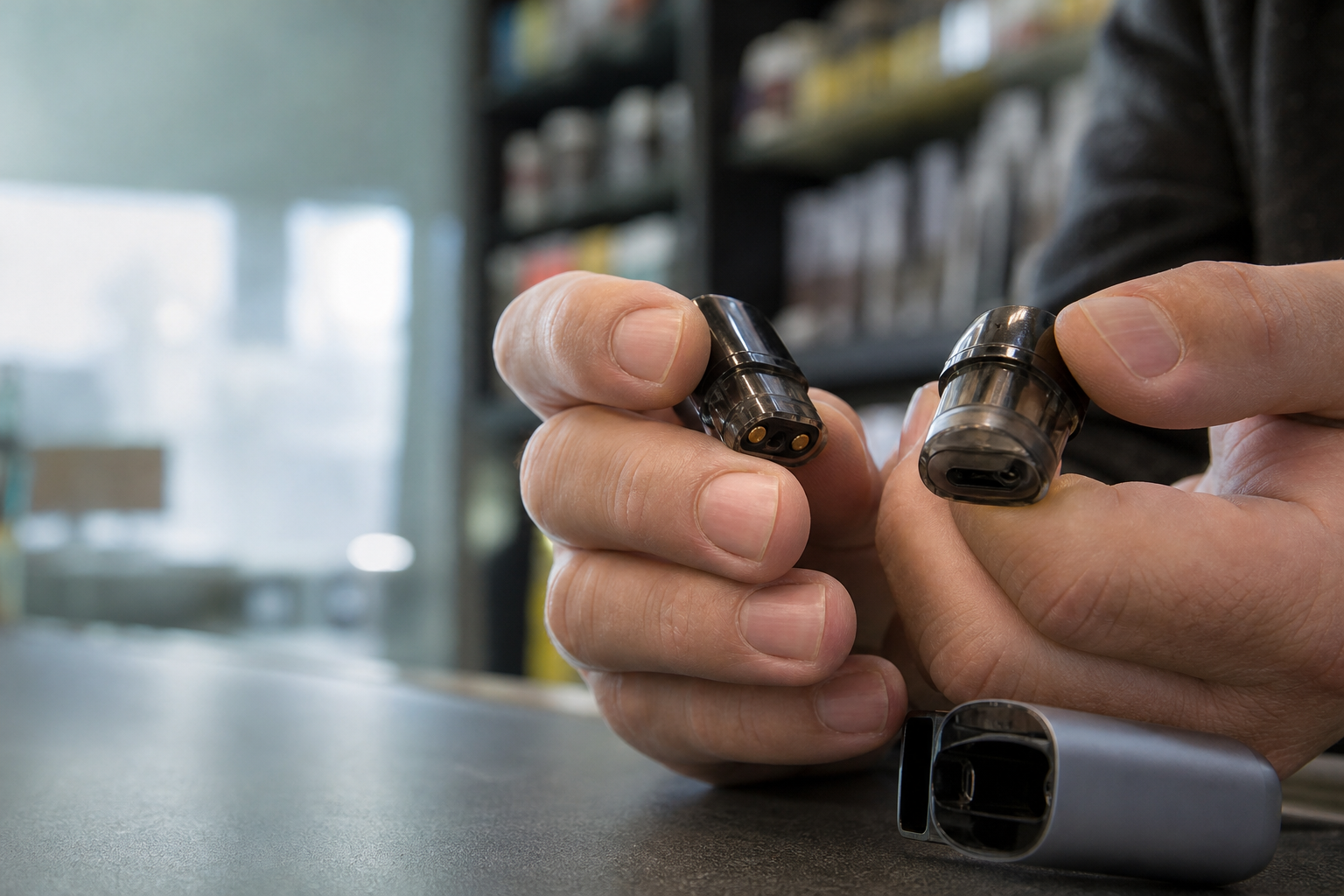
| Prefilled pod device | A rechargeable device that takes sealed pods | Convenience with repeat use | You are limited to the compatible pod range |
| Refillable pod device | A compact device filled with bottled e-liquid | More flavor and nicotine flexibility | Requires filling and routine cleaning |
| Tank or mod-style device | A larger, more adjustable setup | Control over airflow, power, and components | More upkeep and more opportunities for setup errors |
These are device types, not brand types. That distinction is the foundation of a useful comparison.
Causes, most likely first — types of vape brands
-
You are comparing brand names before choosing a device category.
Brand lists can make unlike products look interchangeable. A disposable device, a refillable pod, and a tank setup have different operating demands, costs over time, and waste profiles. A respected maker may not offer the format you actually want.
-
You are using “best” as the only selection standard.
There is no single best brand for every person. The right choice depends on whether you prioritize simple use, replaceable parts, a restricted flavor range, portability, or the ability to adjust the experience. Rankings rarely capture all of those trade-offs.
-
You have mixed up device manufacturers, e-liquid manufacturers, and retailers.
A device maker may produce hardware but not e-liquid. An e-liquid maker may not make devices. A retailer may carry many makers but manufacture nothing. Confusing those roles can lead you to buy a pod, coil, or liquid that does not fit your device.
-
Compatibility information is being overlooked.
Pods, coils, chargers, and replacement parts are generally designed for specific device families. Similar-looking products are not proof of compatibility. A mismatch can cause leaking, poor vapor production, burnt taste, charging problems, or device damage.
-
You are relying on packaging, social posts, or marketplace listings rather than product details.
Attractive design and broad flavor claims say little about authenticity, safety features, instructions, or support. Unreliable listings can also make it difficult to tell what is actually included or whether the product is appropriate for sale where you live.
-
The product is counterfeit, damaged, old, or improperly stored.
A poor experience is not always a brand-wide problem. Broken seals, missing instructions, leaking liquid, unusual battery behavior, or inconsistent labeling are warning signs. Heat, moisture, physical damage, and poor storage can affect devices and e-liquid.
-
Your expectations do not match your nicotine needs or vaping pattern.
A device may feel unsatisfying because the nicotine level, airflow, and vapor output are mismatched to the user—not because the brand is poor. Chasing a stronger or larger-output device without understanding those factors can create an unpleasant experience.
What are some popular brands of vape?
“Popular” generally means widely stocked or frequently discussed, not automatically reliable, legal in every location, or suitable for you. A useful shortlist should be based on the formats a manufacturer supports, whether genuine replacement parts are available through reputable sellers, and whether the company gives clear product instructions.
Popularity should never replace checking local rules, the seller’s legitimacy, and the condition of the exact item in front of you.
What are the top 10 vape brands?
A top-ten list cannot make the choice for you because lists often combine incompatible categories. Rather than copying a ranking, create a short comparison of brands that make your chosen device format. Compare the availability of genuine pods or coils, clear safety information, warranty or support routes, and reliable local stock.
If a list does not state what device category each entry belongs to, treat it as a starting point for research rather than buying advice.
How to fix each one
Choose the device type before the maker
Write down the practical outcome you want. If you want minimal maintenance, a prefilled system may be easier to assess than a refillable setup. If you want to choose e-liquid and replace parts, a refillable pod or tank-style device may be more relevant.
Then compare only brands that make that category. This immediately removes irrelevant results and makes feature differences easier to see.
Replace “best brand” with a decision checklist
Use the same checks for every candidate:
- Is the device format clear?
- Can you obtain genuine compatible pods, coils, or other replacement parts from a reputable seller?
- Are instructions and safety warnings clear?
- Does the product have an identifiable manufacturer and a way to verify authenticity where offered?
- Is it legal for sale and use in your location?
- Does the device match the level of maintenance you are willing to do?
A product that meets these basics is a better prospect than one with a famous name but poor support or uncertain supply.
Separate hardware from consumables
Before purchasing, identify exactly what you need: the device itself, a compatible pod or coil, charging equipment, and, for refillable systems, suitable e-liquid. Read the labeling on the package and device rather than assuming products within a similar style will work together.
Do not force a pod, coil, cable, or battery connection that does not fit. Do not modify a device to accept parts it was not designed to use.
Verify compatibility before opening anything
Check the device’s official instructions or the packaging for the exact compatible part family. Confirm that the pod or coil matches the specific device version, not merely the manufacturer name.
If you already have a device that tastes burnt, leaks, or does not fire, stop trying random parts. Inspect for a depleted battery, an improperly seated pod or coil, visible damage, or liquid where it should not be. Follow the manufacturer’s troubleshooting steps. If the problem persists, discontinue use and contact the seller or manufacturer support.
Buy through accountable sellers
Choose sellers that provide clear product information, sealed packaging, age checks where required, and a route for returns or fault reporting. Be cautious of listings with contradictory specifications, incomplete labeling, damaged seals, or pricing that seems disconnected from the rest of the market.
Avoid using a device or e-liquid if packaging appears tampered with, the liquid has leaked extensively, or the device becomes unusually hot. Keep batteries and devices away from water, extreme heat, and loose metal objects that could create a short circuit.
Match the setup to your actual use
If a product feels too harsh, too weak, or too complicated, do not assume another brand name alone will solve it. Reassess the device category, airflow style, e-liquid suitability, and nicotine level with a knowledgeable retailer or healthcare professional when appropriate.
Anyone who experiences concerning symptoms after vaping should stop using the product and seek medical advice. Devices and e-liquids should be kept away from children and pets.
How to prevent it next time
Start every purchase with a narrow brief: device category, level of maintenance, desired replacement-part availability, and local legal status. Only then look at manufacturers and sellers.
Keep the box, instructions, and proof of purchase until you know the device works properly. Those details make it easier to identify compatible parts and seek support if there is a fault.
For reusable hardware, maintain it as directed. Replace worn consumables with the exact approved type, keep electrical contacts clean and dry, use the recommended charging method, and do not leave a charging device unattended if the manufacturer advises against it.
Finally, do not let a large brand list create urgency. The most dependable choice is usually the one whose format you understand, whose genuine parts you can reliably obtain, and whose safety information is clear enough to follow without guessing.