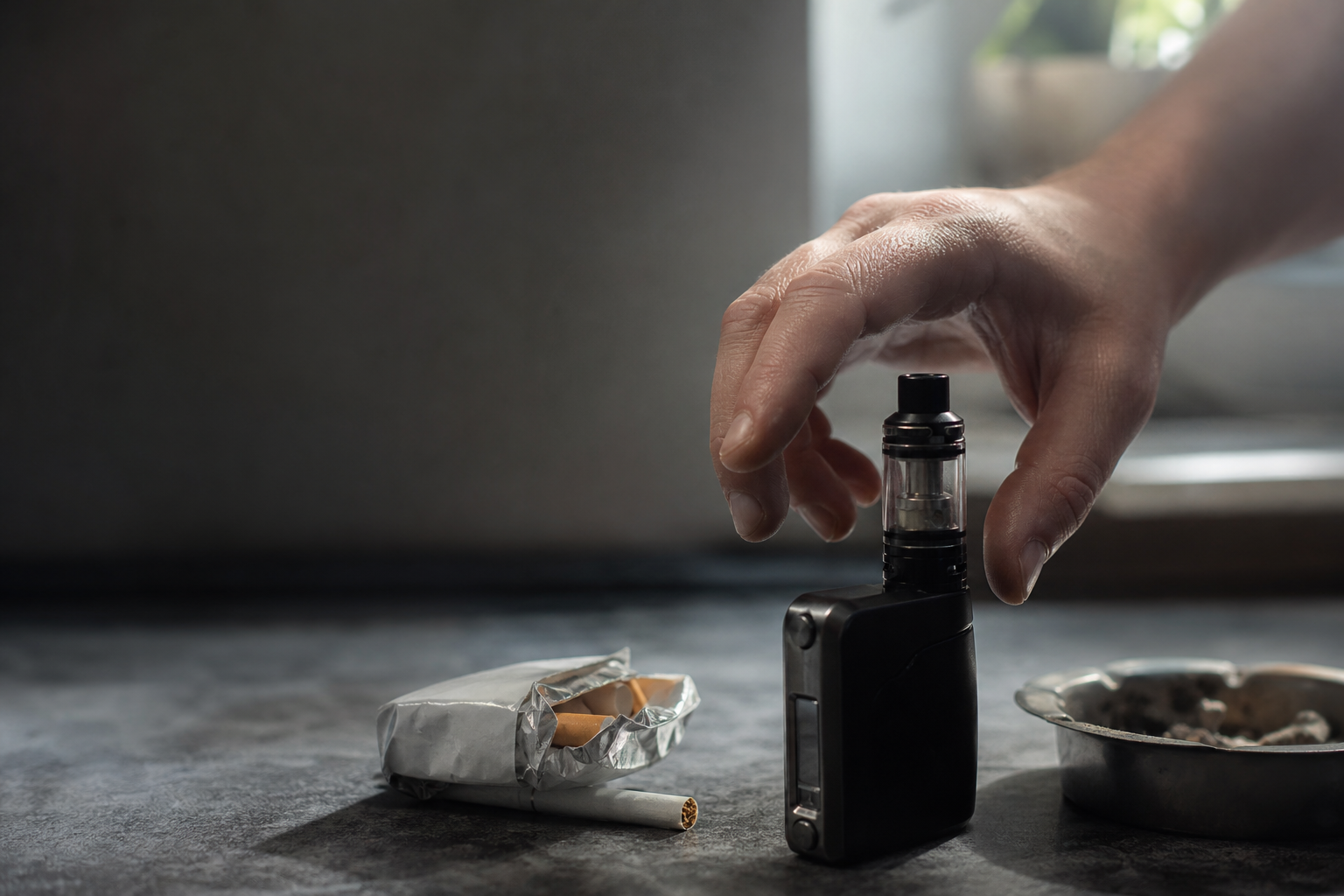
The symptom: vaping vs smoking still leaves you stuck
You switched to a vape, or started using one alongside cigarettes, but the outcome is not what you expected. You may still crave cigarettes, smoke at familiar moments, feel short of breath, spend more than planned, or feel as though nicotine occupies more of your day than before.
The overlooked problem is often not choosing the “wrong” product. It is trying to solve several different needs with one change. Cigarettes can involve nicotine dependence, hand-to-mouth habit, routines, stress relief, social cues, and the immediate sensory effect of smoke. A vape may replace some of those elements but leave others intact.
For adults who smoke, completely moving away from combustible cigarettes may reduce exposure to many harmful chemicals created by burning tobacco. That does not make vaping harmless, and it is not a good reason for someone who does not use nicotine to begin. Continuing to smoke while vaping is usually the least satisfying arrangement because it preserves the cigarette routine and adds another nicotine source.
If you have chest pain, severe breathlessness, fainting, coughing up blood, or symptoms that feel urgent, seek immediate medical care. For persistent cough, wheeze, palpitations, anxiety, or trouble stopping nicotine, a clinician can help you choose a safer plan.
Causes, most likely first: vaping vs smoking problems
Ranked causes
-
You are using both products rather than replacing cigarettes.
Dual use can feel like progress because cigarette count may fall. Yet cigarettes remain available for stress, driving, alcohol, breaks, or social situations. The brain continues to link those moments with smoking, so vaping becomes an addition rather than a replacement. -
Your nicotine needs are not being managed consistently.
A device that does not relieve cravings can push you back to cigarettes. On the other hand, frequent vaping can cause unpleasant effects such as nausea, dizziness, headache, jitteriness, or a racing heartbeat. Nicotine delivery varies by product, device condition, and how someone uses it, so labels alone do not tell the whole story. -
You are trying to replace a ritual, not only nicotine.
The cigarette after a meal, during a commute, or while taking a break may be a deeply rehearsed cue. A vape can be physically available in more places and therefore become an all-day response, while the specific cigarette ritual remains hard to give up. -
The device or liquid is making vaping unpleasant.
Dry hits, leaking, poor charging, burnt taste, throat irritation, or inconsistent airflow make cigarettes seem easier by comparison. Using damaged equipment, altered products, or products from uncertain sources adds avoidable risk. -
You expect vaping to feel exactly like smoking.
Vapor and smoke differ in taste, throat sensation, smell, timing, and the way a device is handled. If the goal is a perfect replica, disappointment can lead to constant switching between products. -
Your trigger plan disappears under stress.
A stressful day, an argument, drinking alcohol, being around smokers, or an unplanned delay can quickly reactivate the impulse to smoke. Willpower works poorly when cigarettes are easy to obtain and the alternative plan has not been decided in advance. -
Health concerns are being treated as an either-or argument.
Some people minimize vaping risks because cigarettes are harmful; others return to cigarettes because vaping is not risk-free. Both views miss the practical goal: avoid combustible tobacco, reduce nicotine dependence where possible, and get support when self-directed changes are not working.
Is vaping a better option than smoking?
Neither smoking nor vaping is risk-free. Cigarettes burn tobacco, producing smoke that exposes the user and nearby people to harmful substances. Vapes do not burn tobacco, but aerosol can still contain nicotine and other potentially harmful substances, and device or liquid quality matters.
For an adult who already smokes, replacing cigarettes completely with a regulated nicotine alternative may be a step away from combustible tobacco. The safest choice for health is not to smoke or vape. Young people, pregnant people, and people who do not use nicotine should avoid vaping.
Is it safe to smoke and vape together?
Using both is not a safe compromise. It keeps exposure to cigarette smoke in place and can make nicotine use harder to track. If vaping is being used as a transition away from cigarettes, set a plan aimed at eliminating cigarettes rather than maintaining both habits indefinitely.
Does vaping count as being a smoker?
“Smoker” usually refers to someone who uses combustible tobacco. But vaping still means nicotine use when the product contains nicotine, and it can still affect health and dependence. Be specific with healthcare professionals: say whether you smoke, vape, use both, how often, and what symptoms you notice.
What are the potential health effects of vaping?
Possible effects include nicotine dependence, throat or mouth irritation, cough, headache, nausea, dizziness, and effects on heart rate or blood pressure. Long-term effects are still being studied. People with breathing or heart symptoms should not assume a product switch is the answer; they should discuss symptoms with a clinician.
How to fix each one
Make a clear decision about cigarettes
Choose one practical goal: stop smoking completely, or set a near-term quit date supported by a clinician or tobacco-cessation service. Avoid an open-ended plan to “smoke less and vape when convenient.” That approach leaves every trigger intact.
Remove cigarettes, lighters, ashtrays, and packs from the places where you usually reach for them. Tell a supportive person what you are changing, especially if social smoking is a common setback.
Match your nicotine plan to your real pattern
Do not respond to every craving by vaping continuously. Notice whether cravings are strongest at certain times or after specific activities. If symptoms suggest too little or too much nicotine, or you repeatedly return to cigarettes, consult a pharmacist, clinician, or cessation specialist rather than endlessly changing products on your own.
Nicotine-replacement therapies and prescription options may be appropriate for some adults trying to stop smoking. A professional can help consider your health history, medications, pregnancy status, and nicotine use.
Replace the cue, not just the cigarette
Write down the situations that reliably lead to smoking. Then assign a brief substitute action to each one.
| Smoking cue | Replacement action |
|---|---|
| After eating | Brush teeth, take a short walk, or make tea |
| Driving | Keep water and gum nearby; change the usual route or audio |
| Work break | Leave the smoking area and walk with a non-smoking coworker |
| Stress | Pause, breathe slowly, message someone, or step outside without nicotine |
| Alcohol or social events | Bring a non-smoking ally and decide beforehand how you will respond to an offer |
The replacement does not need to feel profound. It needs to be easy enough to do at the exact moment the cue appears.
Fix device problems or stop using the device
If you continue vaping as part of a cigarette-quitting plan, use products only as directed. Keep batteries, chargers, liquids, and devices away from children and pets. Do not use a damaged device, improvise charging equipment, or continue using a product that tastes burnt or causes significant irritation.
If vaping is unpleasant, do not assume you have to force it. A different cessation method may fit better. The goal is ending combustible cigarette use, not becoming loyal to a device.
Set boundaries that prevent all-day use
Define nicotine-free places and activities, such as bed, meals, workspaces, or the car. Keep the device out of reach during those periods rather than carrying it in a hand or pocket constantly.
Track patterns without judgment: when you smoke, when you vape, what happened immediately beforehand, and how you felt afterward. This reveals whether use is driven by cravings, convenience, boredom, or a specific emotional trigger.
Get help for symptoms and dependence
Seek medical advice if you have ongoing breathing changes, chest symptoms, repeated vomiting, severe anxiety, or difficulty controlling nicotine use. Stop using a product and get urgent care for severe or rapidly worsening symptoms.
Behavioral support is useful even when medication or a vape is involved. A counselor, quitline, pharmacist, or clinician can help you prepare for triggers and adjust a plan after a lapse instead of treating one cigarette as total failure.
How to prevent it next time
Start with a goal that is measurable in behavior: no combustible cigarettes, fewer nicotine-use situations, or a planned move toward no nicotine. “I will see what happens” leaves too much room for old routines to take over.
Before a high-risk situation, decide what you will do when offered a cigarette, when a craving hits, and when someone nearby smokes. Keep the response brief: decline, leave the area, use your substitute action, and wait for the urge to pass.
Avoid keeping cigarettes as a backup. A backup pack is usually an invitation to return to smoking during the first stressful moment. If you lapse, identify the trigger, change the setup, and resume the plan promptly rather than abandoning it.
Do not treat vaping as a wellness product or a harmless hobby. Treat it, if you use it at all, as a deliberate harm-reduction or cessation tool with boundaries. Review whether it is helping you remain away from cigarettes and whether nicotine dependence is decreasing or becoming more entrenched.
If neither vaping nor self-guided quitting is getting you away from cigarettes, change the method rather than repeating the same cycle. Professional cessation support can provide a structured alternative that addresses nicotine, habits, and health concerns together.