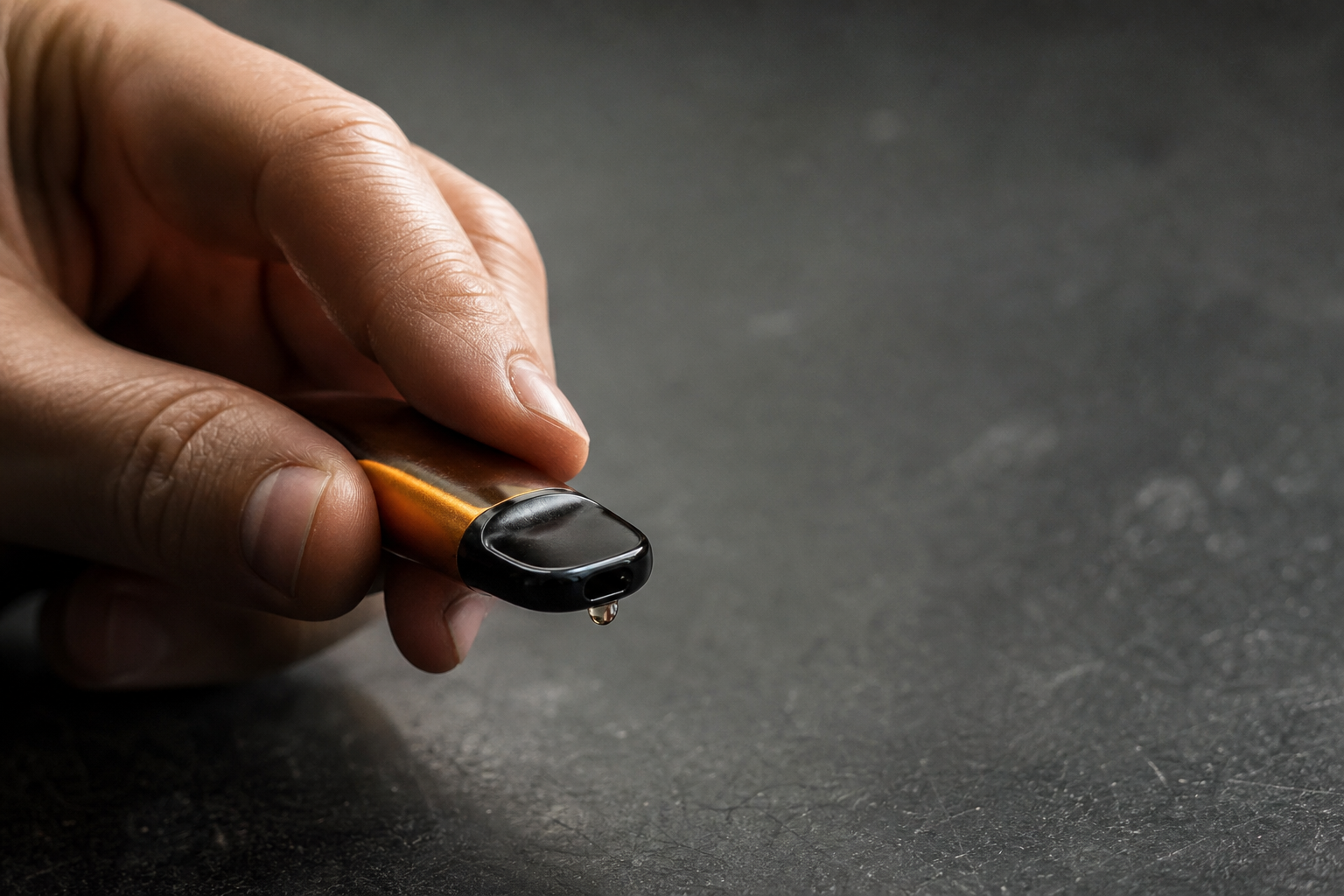
A device that will not produce vapor, has weak flavor, flashes, or feels blocked is usually dealing with an airflow issue, depleted battery, an empty liquid reservoir, or a fault. Disposable vapes are sealed products, so the safest “repair” is often a simple check rather than taking the device apart.
The overlooked point is that a disposable can look unused while still being spent or defective. Treat heat, leaking liquid, a damaged casing, or unexplained activation as a stop-use problem—not a troubleshooting project.
The symptom
Start by matching the problem to what you notice. That makes it easier to avoid fixes that will not address the actual fault.
| What you notice | What it commonly suggests | What to do first |
|---|---|---|
| No vapor and no light | Flat battery, faulty sensor, or spent device | Check for a charging port and inspect for damage |
| Light comes on but there is no vapor | Empty liquid, poor coil connection, or a blocked airway | Take a gentle draw and check the mouthpiece and airflow opening |
| Weak vapor or weak flavor | Low battery, near-empty liquid, or a flooded coil | Let it rest upright, then take a slow, gentle draw |
| Tight draw or no airflow | Blocked mouthpiece or airflow intake | Clear visible lint or debris without inserting objects deeply |
| Gurgling, spitback, or leaking | Flooding, temperature changes, or physical damage | Stop drawing hard, wipe the exterior, and keep it upright |
| Blinking light | Battery, connection, sensor, or internal fault | Consult the package guidance if available; do not force the device |
| Burnt taste | Little or no liquid reaching the coil | Stop using it; continued use will not restore the flavor |
How do disposable vapes work?
Most units use a draw-activated sensor. When you inhale, the sensor tells the battery to heat a coil, which turns e-liquid into an aerosol. Air must move through the device, the battery must have charge, and liquid must reach the coil. A failure in any of those parts can leave you with no vapor.
Causes, most likely first: disposable vapes
-
The device is empty or the battery is depleted. A disposable has a limited amount of liquid and battery power. Once either is exhausted, it cannot reliably produce vapor. A light may still flash even when the device is no longer usable.
-
The mouthpiece or airflow inlet is blocked. Pocket lint, dust, condensation, or a protective plug left in place can restrict airflow. Some designs also have tiny intake holes near the base that are easy to cover with a finger while holding the device.
-
The coil is flooded. Hard, fast draws or repeated use without a pause can pull excess liquid into the air path. This often causes gurgling, droplets at the mouthpiece, weak vapor, or leaking.
-
The device is cold or has been stored poorly. Cold conditions can make e-liquid move less freely. Heat can contribute to leaks, while long periods on its side can allow liquid to collect where it should not.
-
A rechargeable model needs charging. Some products marketed as disposable include a charging port. If yours has one, low charge may be the entire problem. A unit without a charging port is not designed to be charged.
-
The draw sensor is not activating. Condensation, an internal defect, or damage from a drop can prevent the sensor from responding. If there is no response after basic airflow checks, it may not be recoverable.
-
The coil has run dry or is damaged. A burnt taste, especially one that remains after the device rests upright, usually means the wick is no longer adequately supplied with liquid. That is not safely reversible in a sealed device.
-
The product is defective, damaged, or counterfeit. A new device can fail out of the package. Loose parts, cracks, swelling, leaks, unusual heat, or a device that activates by itself are reasons to stop using it immediately.
What are the signs of vaping addiction?
Troubleshooting a device can also be a useful pause point. Cravings, irritability when unable to vape, using more often than intended, or continuing despite unwanted effects can be signs that nicotine use is becoming difficult to control. Consider speaking with a healthcare professional or a tobacco-cessation service for confidential support.
How to fix each one
Check whether it is spent
Remove any silicone caps or stickers from the mouthpiece and base. If the device has been used for a while, produces a burnt taste, or no longer makes vapor despite normal airflow, assume it may be empty or finished.
Do not try to refill a sealed disposable. Opening it can expose the battery and liquid, create leaks, and make the device unsafe to use. Dispose of it through the appropriate local e-waste or battery collection route when possible.
Clear airflow gently
Look closely at the mouthpiece and the air-intake openings. Wipe away visible moisture or lint with a clean, dry tissue. Hold the device so your hand does not cover the air inlet, then take a slow, steady draw.
Avoid poking wire, pins, or sharp objects into the mouthpiece or air holes. This can damage internal components, push debris farther in, or create a short near the battery.
Handle flooding without forcing it
If you hear gurgling or feel liquid reaching the mouthpiece, stop taking hard puffs. Wipe the mouthpiece, keep the device upright, and leave it alone briefly so excess liquid can settle.
Afterward, try a light, unhurried draw. If leaking or gurgling continues, do not shake it aggressively or blow forcefully through it. Persistent flooding in a sealed product is a strong sign that it should be discarded.
Let a cold device return to room conditions
A device that has been outdoors or left in a cold vehicle may perform poorly. Bring it to a normal indoor environment and let it warm gradually while upright. Do not heat it with a radiator, hair dryer, microwave, direct sun, or other external heat source.
If it resumes normal operation after warming, the issue was likely liquid flow rather than a permanent failure. If it leaks, becomes hot, or still will not work, stop using it.
Charge only a model made to be recharged
Check the casing for a charging port. If there is no port, never attempt to connect wires, open the housing, or improvise a charging method.
For a rechargeable disposable, use an undamaged compatible cable and charge it on a stable, nonflammable surface where it can be observed. Disconnect it if the casing gets unusually warm, the device leaks, or the charge does not resolve the problem. Do not use a damaged charging cable or a damaged device.
Recognize when a sensor fault has no safe fix
If airflow is clear, the device is at a normal temperature, and a rechargeable model has charge but still shows no response, the internal sensor or connection may have failed. There is no safe consumer repair for a sealed vape.
If it was newly purchased and appears undamaged, retain the packaging and contact the retailer according to its return policy. Do not dismantle it to investigate.
Stop using a burnt or overheating device
A persistent burnt flavor is a stop sign. Continuing to use the device will not re-saturate a dry wick and can make the experience harsher.
Likewise, stop using a unit that becomes hot while sitting idle, makes unusual sounds, has a swollen casing, or activates without being drawn on. Place it away from combustible materials if safe to do so, do not charge it, and follow local guidance for disposing of battery-powered electronics.
Is one puff of a vape equal to one cigarette?
There is no dependable one-to-one comparison. Nicotine delivery can vary with the device, liquid formulation, puff length, inhalation style, and the condition of the coil and battery. Avoid using puff counts as a precise measure of nicotine intake.
How to prevent it next time
Buy from a legitimate retailer
Use retailers that provide clear packaging, ingredient and nicotine information where required, and a practical way to address an out-of-box fault. Be cautious with products that have damaged seals, missing information, unusually poor build quality, or packaging that does not match the item inside.
Inspect before the first use
Before using a new device, remove all protective pieces and inspect it for cracks, leaks, loose components, or a damaged mouthpiece. If something seems wrong from the start, do not try to make it work.
Store it upright and away from temperature extremes
Keep the device upright when practical, especially during transport. Avoid leaving it in direct sun, a hot vehicle, freezing conditions, or damp places. Temperature swings can affect liquid flow and raise the chance of leaking.
Use a gentle draw
Short, steady draws are less likely to flood the coil than sharp, forceful pulls. Covering airflow holes with your hand can also make a normal device feel blocked, so adjust your grip before assuming it has failed.
Keep it clean and protected
Store the vape where lint and debris cannot pack into the mouthpiece or air inlet. A pocket or bag is convenient, but it can also expose the device to pressure, dirt, and impact. Do not carry a loose vape alongside keys or other hard objects that could damage its casing.
Choose disposal over risky repair
Disposable devices are not built for opening, refilling, coil replacement, or battery repair. When basic checks do not solve the problem, replacing the unit is safer than modifying it. Keep spent or damaged devices away from children and pets, and use local battery or e-waste disposal options rather than placing them loose in household waste.