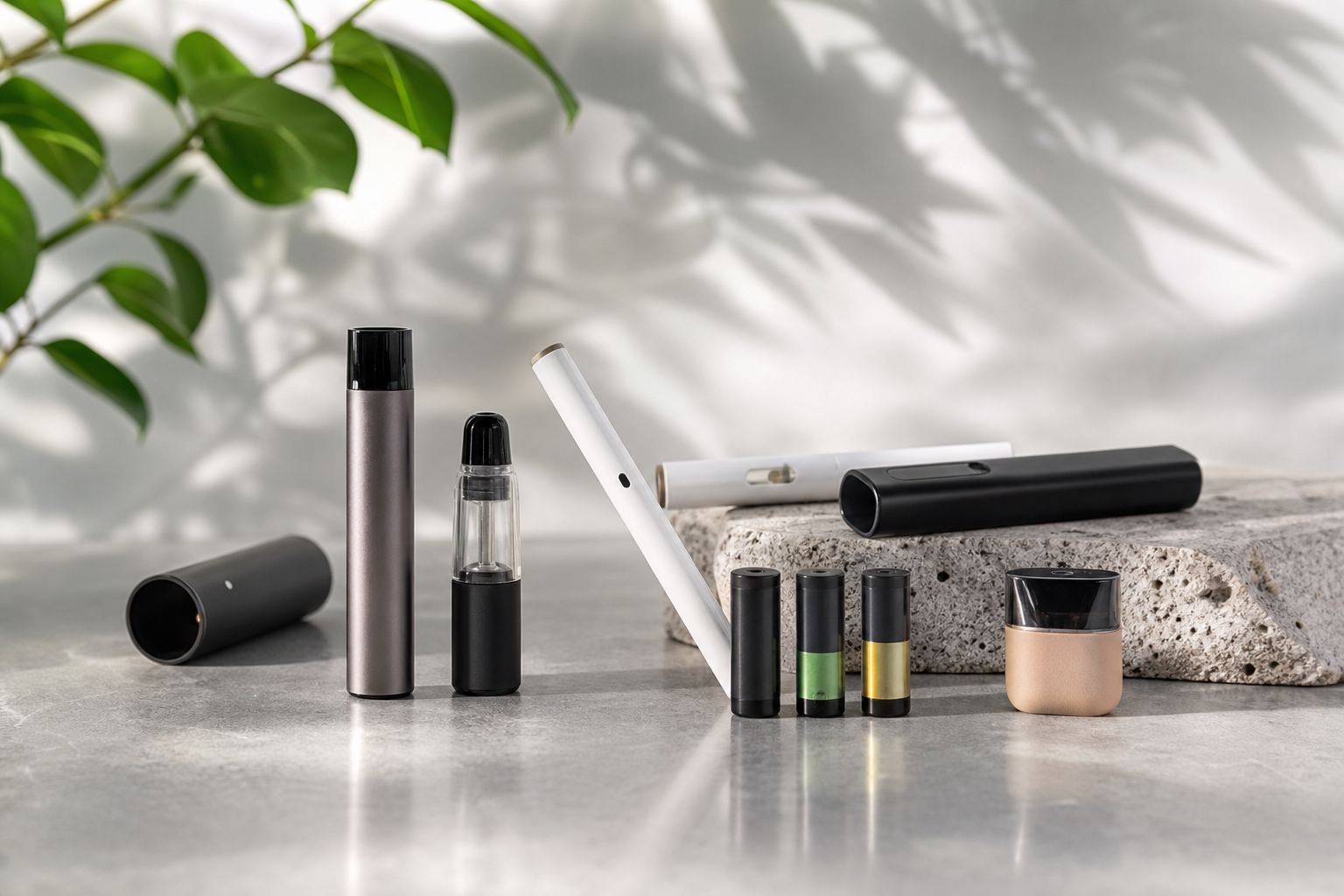
A vape alternative stick can look deceptively similar to a vape: it is handheld, portable, and gives the user something to reach for during a familiar moment. But a similar shape does not guarantee a similar result. The useful question is not which option has the most familiar appearance. It is which part of vaping you are trying to replace: nicotine, the inhale-and-exhale routine, flavor, a hand-to-mouth habit, or a break from stress.
What we swapped and why: choosing a vape alternative stick
The most practical comparison is between a disposable or refillable vape and a non-vape stick designed to occupy the same moment. That might be a nicotine-free flavored-air device, an aroma inhaler, a chewable or oral nicotine product, or a simple behavioral replacement such as gum, water, or a straw.
Each choice addresses a different part of the habit. Treating them as interchangeable leads to frustration. Someone whose main issue is nicotine withdrawal may find that a flavored-air product feels pleasant but does not resolve the underlying craving. Someone who reaches for a vape automatically while driving or working may benefit more from a replacement that interrupts the gesture than from another nicotine product.
For a clean swap, keep the situation as consistent as possible. Use the alternative during the same high-trigger periods when you would normally vape. Pay attention to the craving itself, the urge to hold something, the desire to inhale, and whether the substitute leaves you reaching for the vape shortly afterward.
The alternatives being compared
A nicotine-free inhalation stick is closest to vaping in form. It may offer flavor, scent, airflow resistance, and an exhale, but it does not supply nicotine. That makes it a potential habit substitute rather than a direct nicotine substitute.
Oral nicotine products target nicotine cravings without creating vapor or requiring an inhale. They may be more relevant for people trying to move away from vaping while still managing dependence, though the right choice depends on personal health circumstances and product instructions.
Non-nicotine oral or sensory replacements, including gum, mints, flavored water, and a drinking straw, are less vape-like but can be useful when the strongest pull is the routine rather than nicotine.
| Option | What it can replace | What it does not reliably replace | Best fit |
|---|---|---|---|
| Nicotine-free inhalation stick | Hand-to-mouth movement, airflow, flavor or aroma, taking a pause | Nicotine relief | A person mainly attached to the ritual of vaping |
| Oral nicotine product | Nicotine intake without vapor | The inhale, visible exhale, and device ritual | A person whose cravings feel physical or persistent |
| Gum, mint, flavored drink, or straw | Mouth activity, fidgeting, brief reset | Nicotine and a vape-like inhale | A person with situational or boredom-driven urges |
| No-device habit change | A break from automatic use and device dependence | Immediate sensory replacement | A person ready to remove the cue rather than recreate it |
The reason for making a controlled substitution is simple: the first alternative that feels familiar may not be the one that changes your behavior. A vape-shaped device can preserve the ritual so well that it reduces discomfort in the moment while leaving the automatic reach unchanged. On the other hand, a less familiar substitute may better support someone who wants distance from the entire vaping routine.
Safety matters in the swap
“Inhalable” does not mean harmless. A product that contains no nicotine can still expose the user to ingredients they may prefer not to inhale. Avoid assuming that flavoring, scent, or plant-derived ingredients are automatically safe for the lungs simply because they are familiar in foods or fragrances.
Read the label carefully. Know whether a stick creates an aerosol, uses a heated element, contains nicotine, or is intended only for scent inhalation. Use products only as directed. If you have breathing problems, heart concerns, are pregnant, take medications, or have questions about nicotine dependence, seek guidance from a qualified health professional before choosing a product.
A replacement should also be kept away from children and pets. Small, flavored devices can be especially easy to mistake for something harmless.
What changed
The clearest difference was not whether the substitute felt pleasant. It was whether it matched the reason for the urge.
When the urge was tied to a routine, a nicotine-free stick or another sensory replacement could create a useful pause. Holding an object, taking a deliberate breath, and having a flavor cue may be enough to break the automatic sequence of reaching for a vape. The action feels familiar without necessarily continuing nicotine use.
When the urge was driven by nicotine dependence, the gap was more obvious. A non-nicotine device may satisfy the hands and mouth while leaving a person restless, distracted, irritable, or still preoccupied with vaping. That is not a failure of willpower. It is a sign that the replacement is aimed at the ritual but not the chemical dependence.
Side-by-side results to watch for
| Question after the swap | Nicotine-free stick | Oral nicotine option | Non-nicotine sensory replacement |
|---|---|---|---|
| Does the hand-to-mouth urge ease? | Often, because the form is familiar | Sometimes | Often, if the urge is mostly behavioral |
| Does an inhale-focused craving ease? | Often temporarily | Not usually | Not usually |
| Does a nicotine-driven craving ease? | Not reliably | More likely when used as directed | Not reliably |
| Does the vaping ritual remain central? | It can | Less so | Less so |
| Is there still an inhalation habit? | Yes | No | No |
| Does it help create separation from vaping? | Depends on how it is used | Often | Often |
The biggest practical change comes from whether the substitute reduces automatic behavior. If you use a flavored-air stick in exactly the same places, at the same emotional moments, and with the same repeated pattern as vaping, you may have changed the product without changing the cue loop.
That can still be a meaningful step if your goal is to stop nicotine exposure. But it may not be the best end point if your goal is to stop relying on a device whenever you feel bored, stressed, social, or in need of a break.
By contrast, an alternative that is slightly less convenient or less visually similar can create useful friction. Taking a drink, chewing gum, stepping outside without a device, or practicing a brief breathing pause asks the brain to respond differently. The initial experience can feel less satisfying precisely because it does not perfectly reproduce the old habit. Over time, that difference may be the point.
What did not make much difference
Packaging, novelty flavors, and a sleek device shape may influence which product someone tries, but they do not determine whether cravings become manageable. A better-looking substitute is not necessarily better matched to the problem.
Likewise, a product marketed as nicotine-free is not automatically a complete quitting tool. It may be helpful for the gesture and sensory side of vaping, but it does not address every reason a person uses nicotine. Be wary of promises that a single item will effortlessly remove cravings or make quitting easy for everyone.
The more useful measure is straightforward: after using the alternative, do you feel able to return to what you were doing without immediately seeking a vape? If not, identify what remains unsatisfied. It may be nicotine, a stress response, a social cue, or simply the expectation of a frequent break.
The rule of thumb
Choose the least vape-like option that still addresses your real trigger.
If nicotine is the main issue, a nicotine-free stick alone may not be enough. Consider discussing evidence-based nicotine support and a plan for reducing dependence with a healthcare professional or tobacco-treatment service.
If the ritual is the main issue, a non-nicotine inhalation stick can be a transitional tool, provided you understand what it contains and do not mistake it for risk-free. Set boundaries around its use so it does not simply become a new all-day device habit.
If stress, boredom, driving, work breaks, or social settings trigger vaping, choose a replacement linked to that situation. Keep water or gum available, use a straw for the oral habit, take a brief walk, or create a deliberate pause before acting on the urge. The goal is not to make every replacement feel identical. It is to make the old automatic response less necessary.
A useful test is whether the substitute moves you toward your stated goal. If your goal is to avoid nicotine, check that the product truly contains none. If your goal is to stop inhaling anything, choose an oral or behavioral replacement rather than an inhalation stick. If your goal is to quit the device ritual altogether, gradually rely less on anything shaped like a vape.
The right alternative is the one that solves the specific problem you have without quietly preserving the part of vaping you are trying to leave behind.