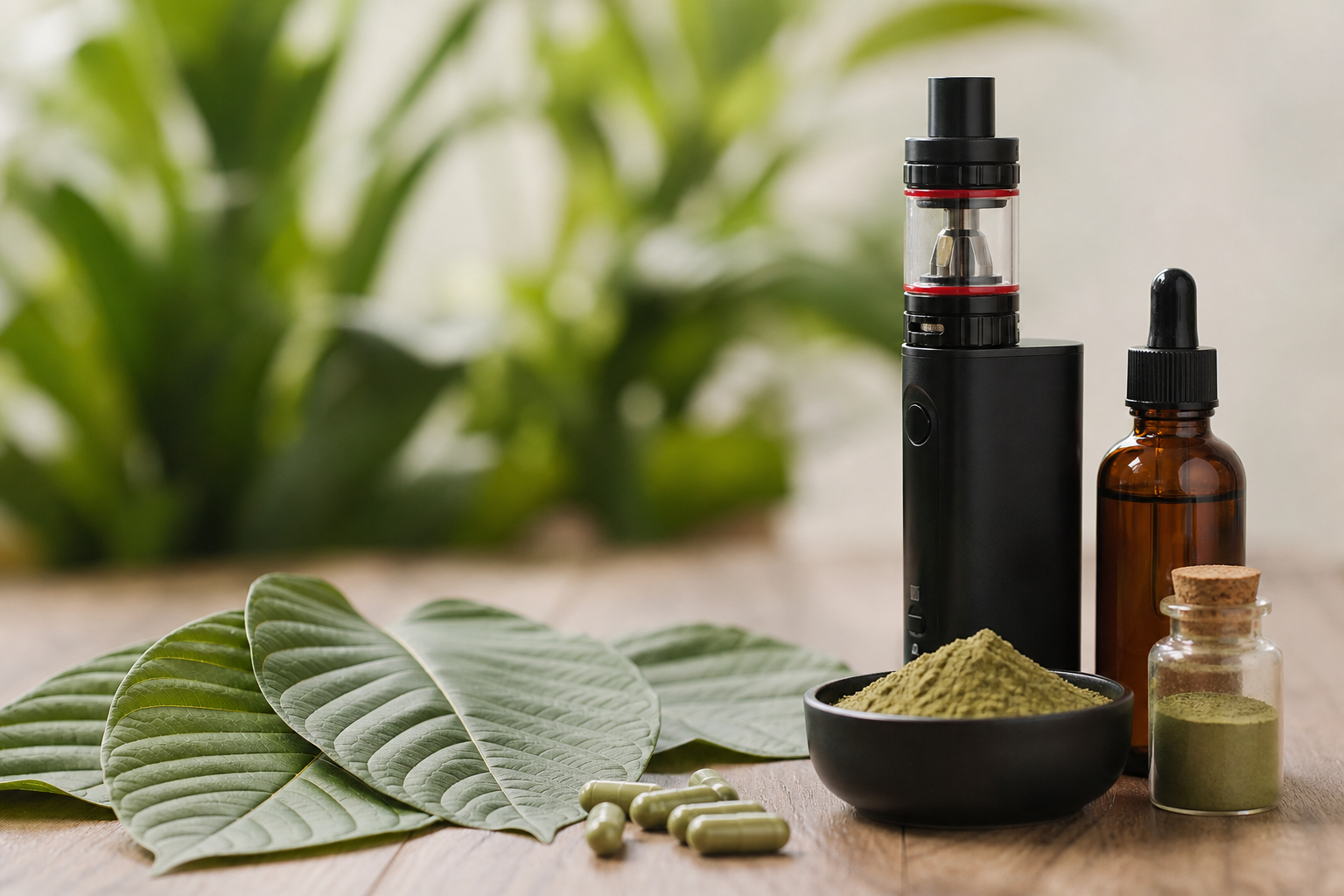
Kratom and vaping are often discussed together because both may be used by adults seeking a change in mood, energy, relaxation, or routine. But they are not interchangeable products, and treating them as if they are can obscure important differences in how they work, how they are regulated, and what risks they may carry.
For consumers weighing kratom vs vaping, the most useful starting point is simple: kratom is a plant-derived product traditionally consumed orally, while vaping is a delivery method that heats a liquid or other material into an inhaled aerosol. Either category can include very different products, ingredients, and risk profiles.
Different Products, Different Routes of Use
Kratom refers to products made from the leaves of Mitragyna speciosa, a tree native to Southeast Asia. Powders, capsules, teas, extracts, and chewable preparations are common forms. Its notable active constituents, often called kratom alkaloids, interact with receptors in the body and may produce effects that vary with the person, amount used, product formulation, and other substances involved.
Vaping generally involves an electronic device that heats a liquid into an aerosol for inhalation. Many vape products contain nicotine, while others may contain flavorings, cannabinoids, or other compounds. The term does not describe one substance; it describes a method of administration.
That distinction matters because oral consumption and inhalation affect the body differently. An inhaled substance can reach the bloodstream quickly, which may make effects feel more immediate and may encourage repeated use. Oral products typically have a slower onset, though extracts can still be potent and unpredictable depending on their concentration.
Are Kratom Vape Products a Reliable Category?
Consumers may encounter products marketed as kratom vape products, sometimes described with broad terms such as botanical, alkaloid, or enhanced-herb formulations. These products deserve extra caution.
Kratom has a long-established association with oral use, not inhalation. Heating plant material or an extract can alter its chemical makeup. It is not safe to assume that an ingredient suitable for an oral capsule or tea is suitable to inhale after being heated in a vape device. The effects of heat, carrier liquids, additives, contaminants, and aerosols can all matter.
A label claiming to contain kratom does not necessarily tell a buyer what is actually in the cartridge or disposable device. It may contain a kratom-derived ingredient, a mixture of botanicals, nicotine, cannabinoids, synthetic compounds, flavoring agents, or a combination of these. Vague labeling is a reason to walk away, not a reason to experiment.
Consumers should be particularly wary of products that make dramatic claims about euphoria, pain relief, withdrawal, focus, or “legal highs.” Such language can signal an attempt to sell an inadequately characterized product rather than provide meaningful ingredient information.
Comparing Kratom Safety and Vape Health Risks
Neither kratom nor vaping should be treated as risk-free. Their hazards differ, and those differences should guide decisions.
Kratom safety concerns include potential dependence, tolerance, withdrawal symptoms after regular use, nausea, constipation, dizziness, sedation, and impaired judgment. Higher-potency extracts can raise the chance of unwanted effects because it is easier to consume a large amount of active alkaloids without realizing it. Serious adverse events have been reported, especially where multiple substances, adulterated products, or pre-existing health conditions are involved.
Vape health risks depend heavily on what is being inhaled. Nicotine is addictive and can reinforce frequent use. Inhaling heated aerosols may expose users to substances that irritate the lungs and airways. Device quality, battery safety, counterfeit products, and unknown additives add further concerns. People with respiratory or cardiovascular conditions have particular reason to discuss vaping with a qualified health professional.
Using kratom and vaping together can add complexity rather than solve it. Combining substances may make it harder to identify what is causing a racing heart, nausea, anxiety, sedation, breathing discomfort, or other symptoms. A product marketed as a nicotine alternative is not automatically safer if its ingredients and inhalation effects are unclear.
Regulation Does Not Equal Quality Assurance
Vape regulations vary significantly by jurisdiction and can cover sales age, nicotine concentration, packaging, device standards, advertising, and product registration. Those rules may reduce some risks, but a product’s presence in a store or online marketplace should not be taken as proof that every ingredient has been independently evaluated for inhalation.
Kratom’s legal status also varies by country, state, and locality. Consumers should check local requirements before buying, possessing, or traveling with kratom products. Legal availability is not the same as medical approval, and it does not replace thoughtful product screening.
For herbal supplements and botanical products, quality control is especially important. Look for companies that identify the product’s ingredients clearly, provide batch information, and make credible independent laboratory testing available for contaminants and composition. Testing cannot erase all risk, but transparent testing is more informative than unsupported marketing claims.
A Practical Kratom Consumer Guide
A careful approach begins with deciding what problem you are trying to solve. If the goal is to stop smoking, evidence-based cessation support, nicotine-replacement options, counseling, and medical guidance may be more appropriate than substituting an unknown botanical vape. If the goal is relaxation, energy, or relief from discomfort, consider whether there are safer non-drug approaches or clinical options worth trying first.
For adults who choose responsible kratom use, several precautions can reduce avoidable harm:
- Prefer clearly labeled oral products over inhaled products with uncertain chemistry.
- Avoid combining kratom with alcohol, opioids, benzodiazepines, stimulants, or other substances that can increase impairment or strain the body.
- Be especially cautious with concentrated extracts and products that do not disclose alkaloid content.
- Do not drive, operate machinery, or take on safety-sensitive tasks if you feel sedated, dizzy, impaired, or unusually stimulated.
- Avoid use during pregnancy or breastfeeding, and seek individualized medical advice if you have liver, kidney, heart, respiratory, or mental health conditions.
- Stop using the product and seek medical attention for severe symptoms such as trouble breathing, chest pain, fainting, confusion, seizures, severe vomiting, or signs of an allergic reaction.
Regular users should also watch for signs that use is becoming harder to control: needing more for the same effect, using despite negative consequences, or feeling unwell when trying to stop. Those signs warrant a conversation with a healthcare professional or substance-use support service, not shame.
Making a More Informed Choice
The central consumer consideration is not whether kratom or vaping is broadly “better.” It is whether a specific product, route of use, and reason for use make sense given the available information and your personal health situation.
Kratom is not simply an herbal version of vaping, and vaping is not a neutral delivery system for any ingredient a manufacturer chooses to put in a cartridge. When product composition is uncertain—especially when a botanical extract is heated and inhaled—the safest choice is usually not to use it. Clear labels, transparent testing, modest expectations, and attention to interactions are more useful than hype when navigating either market.