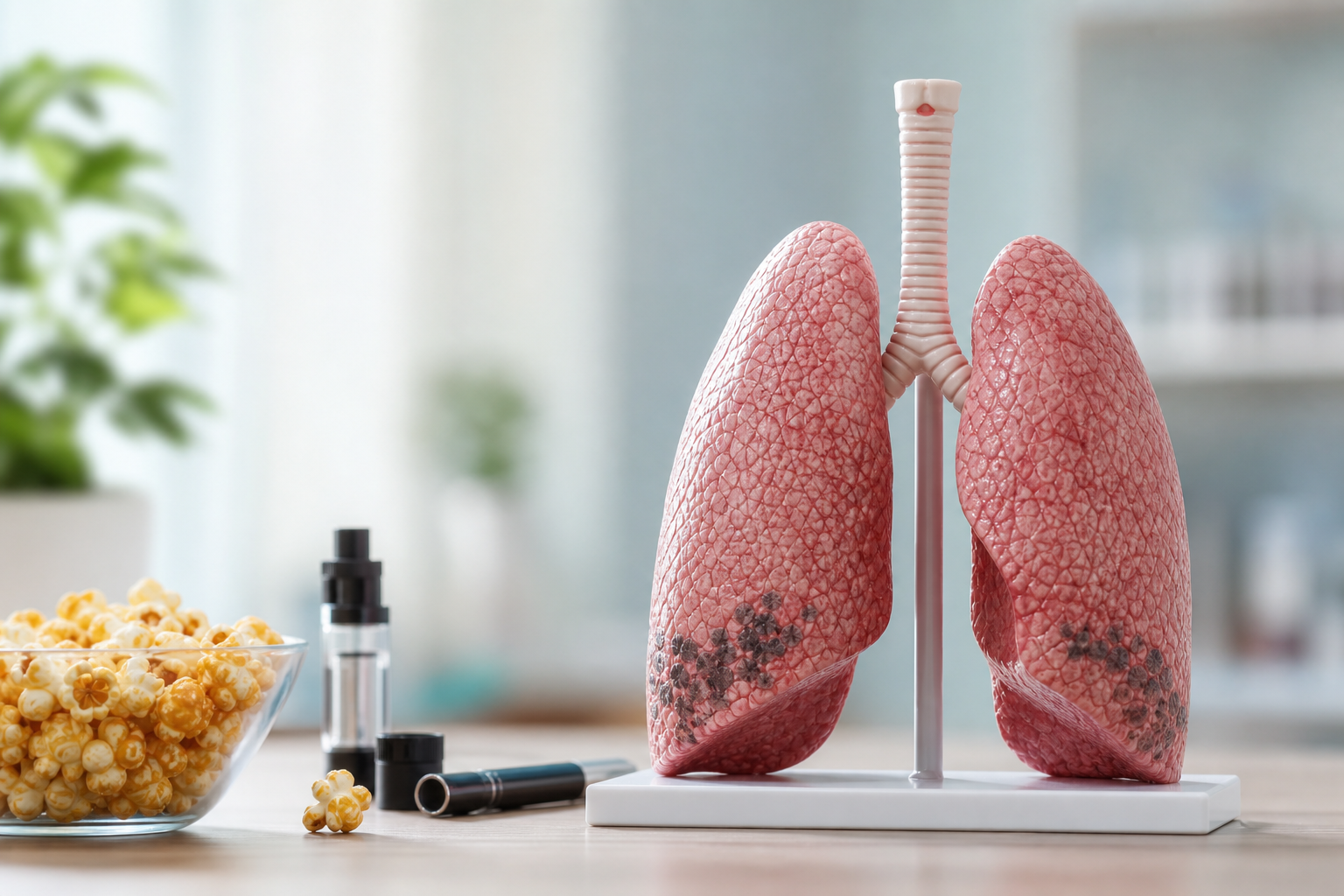
Breathing changes can be alarming, especially when you have heard the term popcorn lung connected with vaping. The practical goal is not to diagnose yourself from a symptom checklist. It is to recognize when breathing symptoms need medical attention, reduce avoidable airway exposures, and prepare useful information for a clinician.
This term is commonly used for bronchiolitis obliterans, a serious condition involving inflammation and scarring in the smallest airways of the lungs. Its symptoms can overlap with many more common problems, including respiratory infections, asthma, allergies, and irritation from smoke or aerosol. That overlap is why an informed medical assessment matters.
What you need before you start
You do not need special equipment to take sensible next steps. You do need a clear record of what you are experiencing and a willingness to seek care if symptoms are persistent, worsening, or concerning.
What to gather
Before contacting a healthcare professional, collect the following information:
- A brief description of your breathing symptoms, such as shortness of breath, wheezing, chest tightness, a dry cough, or unusual fatigue during ordinary activity.
- When you first noticed the symptoms and whether they seem stable, improving, or worsening.
- A list of inhaled exposures. Include vaping, cigarettes, cannabis products, workplace dusts, fumes, chemical sprays, smoke, and recent time around strong odors or poor air quality.
- The type of vape product used, including whether it came from a regulated retailer or an informal source. Do not bring an unlabelled product to use; a photo of the label may be more useful.
- Your current medications, known allergies, past lung conditions, and any recent illness.
- Notes about what makes symptoms worse or better, such as exercise, lying down, cold air, work tasks, or vaping.
A phone note or a simple paper list is enough. The point is to prevent important details from being forgotten during an appointment.
Tools you may need
- A way to write down symptoms and exposures
- Access to a primary care clinic, urgent care service, or emergency care when appropriate
- A list of medications and health conditions
- Support from a trusted person if anxiety, breathlessness, or nicotine withdrawal makes it hard to manage alone
Know the urgent warning signs
Seek urgent medical help for severe trouble breathing, chest pain, bluish or grayish lips or skin, confusion, fainting, coughing up blood, or symptoms that rapidly worsen. These signs can have many causes, and they should not be managed by waiting to see if they pass.
If symptoms are not immediately dangerous but continue, recur, or interfere with normal activity, arrange a clinical evaluation. Avoid trying to settle the question with online symptom comparisons alone.
Step-by-step: popcorn lung
Start by separating the name from the diagnosis
-
Understand what the term means. Popcorn lung is a casual name for bronchiolitis obliterans. It refers to damage and narrowing in the small airways, rather than a coating or material physically filling the lungs. The nickname came from workplace cases involving inhalation of certain flavoring chemicals, but the medical condition can have different causes.
-
Avoid assuming every cough or vaping-related symptom is this condition. A cough, wheeze, or breathlessness can result from infection, asthma, vaping-related irritation, smoking, anxiety, heart concerns, and other respiratory problems. Symptoms alone cannot confirm the cause.
-
Treat persistent breathing symptoms as a reason for evaluation, not a reason to panic. Early assessment gives a clinician the best opportunity to identify what is happening and advise on the right next action.
Stop adding possible airway irritants
-
Pause vaping if you have new or unexplained breathing symptoms, particularly if they are worsening. Continuing to inhale aerosol while trying to work out a respiratory problem can make airway irritation harder to assess.
-
Avoid smoking, secondhand smoke, cannabis smoke, and unnecessary exposure to aerosols, fumes, dust, and strong fragranced products. If an exposure is part of your job, follow workplace safety procedures and tell the clinician about it.
-
Do not replace vaping with a product of unknown origin or attempt to modify liquids, cartridges, coils, or devices. Homemade or altered products can introduce additional uncertainty and risk.
-
If nicotine dependence makes stopping difficult, tell a healthcare professional. They can discuss cessation support and options that do not rely on continued inhalation. Withdrawal can be uncomfortable, but new breathing symptoms deserve priority.
Record symptoms in a useful way
-
Write down the symptom rather than labeling it. “Short of breath walking upstairs” is more useful than “I think my lungs are damaged.” Note whether there is cough, mucus, wheezing, pain, feverishness, dizziness, or reduced ability to do usual tasks.
-
Note the context. Record whether symptoms occur after vaping, at work, overnight, during exercise, or after contact with a particular irritant. A pattern does not prove cause, but it can guide the clinical conversation.
-
Include your exposure history honestly. People sometimes leave out vaping or cannabis use because they fear judgment. That information can materially affect which conditions a clinician considers and which tests are appropriate.
-
Do not repeatedly test your breathing through strenuous exercise. If activity brings on concerning breathlessness, stop and seek medical advice instead of pushing through to measure your limits.
Arrange the right level of care
-
Contact a healthcare professional for a persistent cough, wheezing, unexplained breathlessness, chest tightness, or reduced exercise tolerance. Explain that you have respiratory symptoms and a history of inhaled exposure.
-
Be ready for the clinician to consider several explanations. They may listen to your lungs, check oxygen levels, review your history, and decide whether lung function testing, imaging, or referral is needed. The exact workup depends on symptoms and examination findings.
-
Ask clear questions: What are the most likely causes? What symptoms should prompt urgent care? Should you avoid particular exposures? What follow-up is needed if symptoms do not improve?
-
Follow through with recommended testing and follow-up. Some airway problems are not settled by a single symptom report or a single normal-feeling day. Equally, do not interpret a test result yourself without discussing what it means in your situation.
Make a longer-term exposure plan
-
Decide on a plan to remain off vaping or to work toward stopping with support. If vaping was part of your routine, identify common triggers such as driving, stress, alcohol, social settings, or breaks at work.
-
Replace the routine, not just the product. Keep water available, take a brief walk, use a non-inhaled distraction, or contact a supportive person when cravings arise. A plan for the habit loop can be as important as a plan for nicotine.
-
Keep medical appointments even if symptoms improve after avoiding aerosol. Improvement is useful information, but it does not always establish the cause or remove the need for follow-up.
-
Reassess workplace and home exposures. Ventilation, protective practices, and avoiding unnecessary chemical sprays can reduce irritation for anyone with sensitive airways.
Common mistakes and how to fix them
Mistake: Diagnosing yourself from a symptom list
Breathlessness and cough are real symptoms, but they are not specific to one condition. Self-diagnosis can lead to either unnecessary fear or dangerous delay.
Fix: Describe what you feel, when it began, and what exposures you have had. Let a clinician determine whether testing is needed.
Mistake: Assuming vaping is harmless because it does not involve burning tobacco
Vape aerosol is not the same as cigarette smoke, but “different” does not mean risk-free. Aerosol can contain substances that may irritate the airways, and device use, liquid composition, heating conditions, and product quality all affect exposure.
Fix: If respiratory symptoms occur, stop inhaling aerosol and seek individualized medical guidance. Choose regulated products where legal, but do not treat regulation as a guarantee that a product is safe for the lungs.
Mistake: Focusing only on one chemical
Discussion of flavoring chemicals can make it seem as though finding or avoiding a single ingredient settles every lung-health question. Respiratory risk is more complicated than that, and products may contain multiple substances.
Fix: Focus on the action you can take: avoid unnecessary inhaled exposures, avoid unverified products, and get symptoms assessed.
Mistake: Hiding vaping or other inhaled exposures from a clinician
Leaving out details can delay an accurate assessment. Medical professionals need relevant exposure information to evaluate respiratory complaints properly.
Fix: Be direct about what you use, how often you use it, where you obtained it, and whether you also smoke or encounter workplace fumes. Your care is better when the history is complete.
Mistake: Waiting because symptoms come and go
Intermittent symptoms can still matter, especially when they recur with activity or exposure. Feeling better briefly does not necessarily explain why the symptom occurred.
Fix: Keep notes, avoid triggers, and book an appointment if the pattern persists. Escalate sooner if symptoms worsen or urgent warning signs appear.
Mistake: Trying to “cleanse” the lungs
Detox drinks, supplements, steam treatments, and unproven home remedies do not reverse airway scarring or replace medical care. Some inhaled remedies can further irritate the lungs.
Fix: Stop the suspected exposure, use prescribed treatment exactly as directed, and rely on clinical follow-up rather than cleansing claims.
FAQ
Is popcorn lung the same as a cough from vaping?
No. A cough can arise from many causes, including temporary irritation or infection. Bronchiolitis obliterans is a specific and serious small-airway condition that requires medical evaluation; it cannot be confirmed from a cough alone.
Can vaping cause popcorn lung?
Vaping can expose the airways to potentially irritating chemicals and particles, but a particular person’s symptoms cannot be attributed to vaping without medical assessment. Avoiding vaping is a prudent step when respiratory symptoms appear, while a clinician evaluates other possible causes.
What symptoms should make me seek urgent help?
Seek urgent help for severe breathing difficulty, chest pain, fainting, confusion, blue or gray discoloration of the lips or skin, coughing up blood, or rapidly worsening symptoms. Do not wait for a routine appointment when these occur.
Can popcorn lung be diagnosed at home?
No. Home symptom tracking can help you report a clear history, but diagnosis may require a clinical examination and tests selected by a healthcare professional.
If I stop vaping and feel better, do I still need to see a clinician?
If symptoms were significant, persistent, recurrent, or linked to reduced ability to do normal activities, contact a clinician even if they improve. Improvement after avoiding an exposure is important to report, but it does not by itself identify the condition or rule out follow-up.