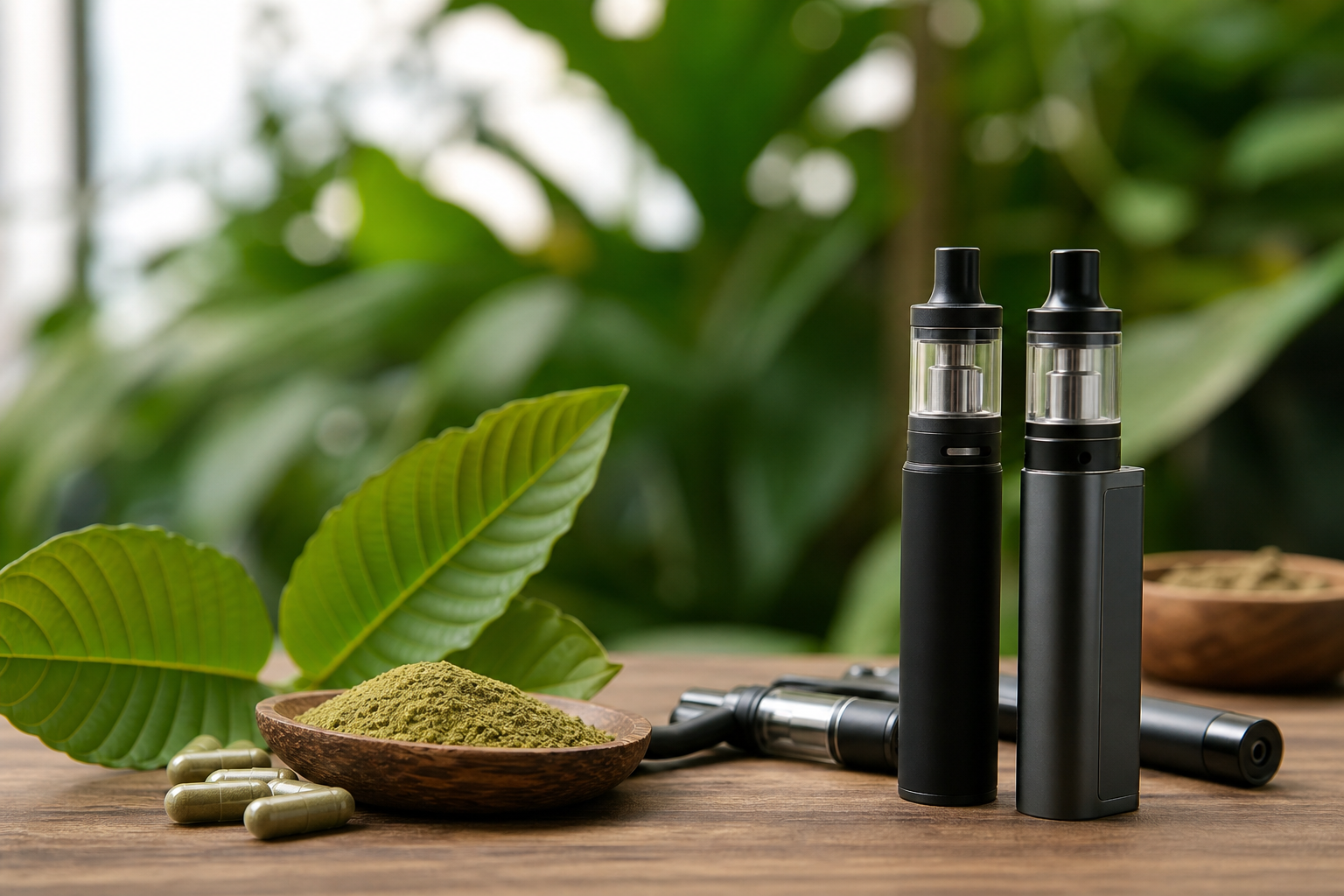
Vape devices and kratom often appear in the same conversations because both are used by adults looking for alternatives to more conventional products. That overlap can be misleading. They are different product categories, have different routes of use, and raise different safety questions.
For consumers, the most useful starting point is simple: do not assume that a product associated with plant-based ingredients is appropriate for a vape device. Kratom is generally sold as leaf powder, capsules, tea, extracts, and other oral formats. Vaping involves heating a formulated liquid or other material into an inhaled aerosol. Those are not interchangeable methods of use.
Why the Categories Are Being Linked
Interest in herbal alternatives has grown alongside interest in nicotine alternatives. Some people researching ways to change their nicotine habits also encounter kratom in online communities, retail shops, or wellness-oriented discussions. Others follow both markets because they are interested in consumer choice, product regulation, or harm-reduction conversations.
That shared audience does not make the products equivalent. A nicotine vape product is designed around a specific delivery system, with hardware, coils, batteries, e-liquid ingredients, and heat settings all affecting what is inhaled. Kratom products involve their own questions around sourcing, alkaloid content, serving size, labeling, interactions, and personal suitability.
Good kratom education separates these issues instead of treating every “alternative” product as part of one interchangeable category.
Do Not Put Kratom Products in a Vape Device
A common safety concern is experimentation: adding powders, extracts, teas, oils, or homemade mixtures to vape tanks, cartridges, or other devices. This is not a sound consumer practice.
Vape devices are engineered for materials intended for inhalation and for the particular heating characteristics of that device. Plant powders can clog equipment, burn unevenly, and create unpredictable byproducts when heated. Oral extracts and tinctures may contain ingredients that are unsuitable for inhalation. Even a product that seems simple or “natural” can become a different substance when exposed to high heat.
There is also no reliable basis for treating a homemade kratom vape mixture as a controlled version of an oral kratom product. The dose, aerosol composition, and effects may be difficult to predict. Product labels for oral use should not be read as instructions for inhalation.
For anyone using kratom, sticking to products used as directed is a central part of a practical kratom consumer guide. For anyone using a vape, only use materials explicitly intended for that device and inhalation route.
Vaping Safety Starts With the Device
Vaping safety is not limited to what goes into a tank or pod. Device condition and handling matter as well. Battery failures, leaking liquid, damaged coils, and counterfeit or poorly made accessories can create avoidable risks.
Consumers can reduce those risks by following a few straightforward habits:
- Use the charger, battery type, and accessories recommended by the device manufacturer.
- Stop using batteries that are damaged, unusually hot, swollen, or have torn wraps.
- Keep devices away from water, extreme heat, and loose metal objects such as keys or coins.
- Replace coils or pods when performance declines, flavor becomes burnt, or leakage appears.
- Buy liquids and replacement parts from reputable sellers that provide clear labeling.
- Store all vape products and kratom products securely, away from children and pets.
Responsible vaping also means recognizing that inhalation is not risk-free. Adults who do not currently use nicotine should not begin vaping simply because products are marketed as alternatives. Adults who do use nicotine and are considering a change should seek clear, evidence-based guidance rather than relying on social-media claims or shop-floor advice alone.
Reading Labels With a Critical Eye
Clear labeling is one of the strongest consumer protections in both markets. With vape products, look for an ingredient list, nicotine concentration where applicable, manufacturer information, warnings, and basic batch or traceability details. Be wary of products with vague branding, missing ingredients, medical-style promises, or unusually dramatic claims.
With kratom, consumers should seek plainly identified product forms, transparent serving information, lot details, and supplier practices that support quality control. A label should not promise to diagnose, treat, cure, or prevent disease. Those claims are a warning sign, not proof of quality.
The same principle applies across vape trends: novelty does not equal safety. Disposable formats, high-capacity devices, synthetic-style flavor profiles, and heavily promoted new compounds can move quickly through the market. Before trying a new product, determine what it contains, how it is meant to be used, and whether the seller can answer basic questions about its origin and handling.
Be Careful With “Herbal Vape” Marketing
The word “herbal” can suggest gentleness or safety, but it does not answer the most important question: safe for which route of use? Something that may be consumed as a tea is not automatically suitable for inhalation. Something sold as an essential oil is not automatically safe to heat and inhale. Something derived from a plant is not automatically compatible with vaporizer technology.
Consumers should also distinguish between a legitimate description of ingredients and an implied health claim. Marketing that promises relaxation, focus, pain relief, detoxification, or a completely harmless experience may be oversimplifying a complex product. Personal reactions can vary, especially for people with health conditions, medication use, sensitivity to stimulants or sedatives, pregnancy, or a history of substance-related concerns.
When uncertain, choosing not to combine products is often the safer decision. Avoid pairing kratom with alcohol, sedatives, or other substances that can impair judgment or affect the body in overlapping ways. If a person experiences concerning symptoms after using any product, they should stop use and seek appropriate medical guidance.
Following Kratom News Without Chasing Hype
Kratom news and vape news can change quickly, particularly when regulations, enforcement actions, product recalls, or public-health concerns emerge. Consumers benefit from checking current local rules, because legality and retail access can vary by location.
It is equally important to judge headlines carefully. A single anecdote does not establish broad product safety, and a viral claim does not replace transparent manufacturing information. Look for reporting that distinguishes between a specific product issue, a pattern of misuse, a contaminated product, and the normal risks associated with a category.
Consumer awareness is not about panic or blind trust. It is about asking practical questions: Is this product intended to be inhaled? Is the device in safe working condition? Is the label complete? Is the claim realistic? Am I combining substances unnecessarily?
For adults navigating both categories, the clearest rule is to keep them separate. Use vape devices only with products designed for inhalation, approach kratom with informed caution, and treat marketing language as a prompt for questions rather than an answer.